The short answer
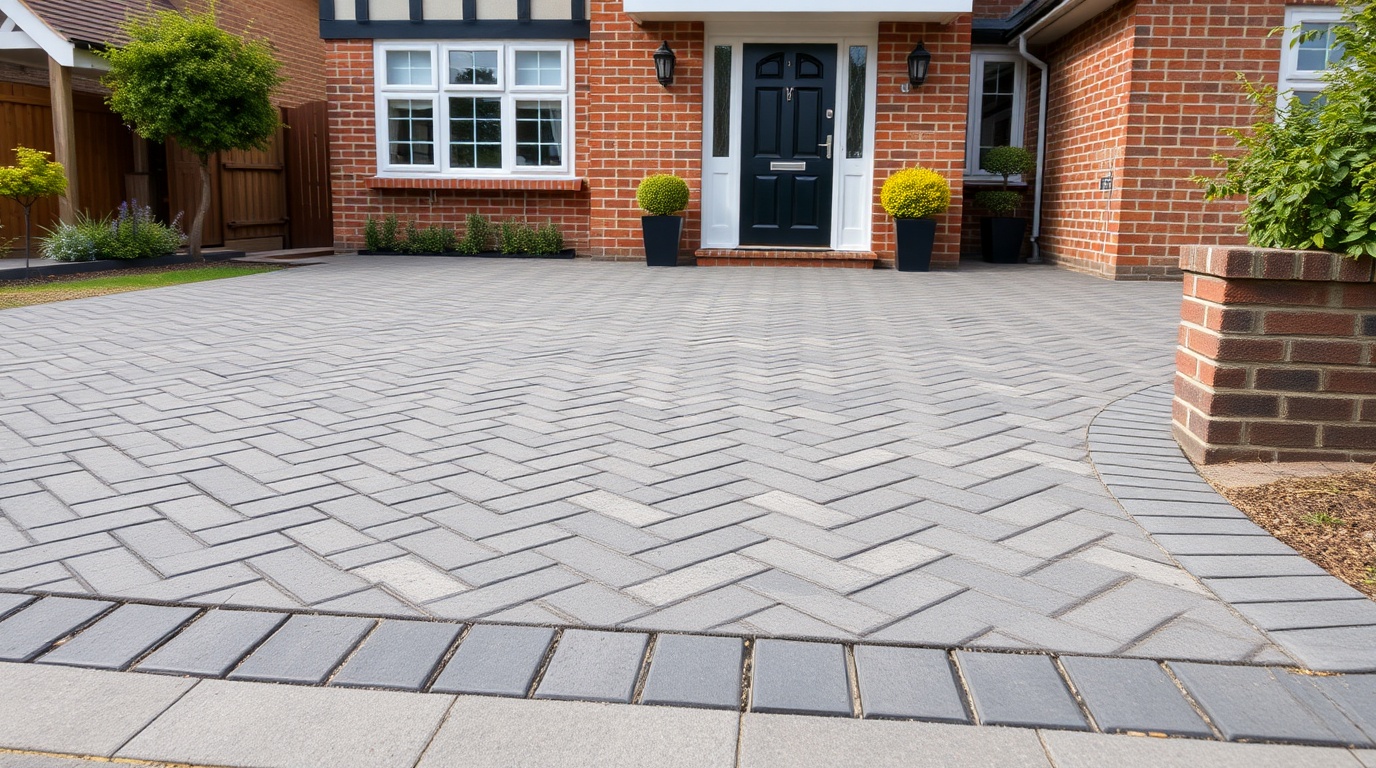
Block paving is a firm, hand-laid surface of individual blocks over sand and a sub-base, while a gravel driveway is loose aggregate spread over a sub-base, ideally within edging and over a stabilising grid or membrane. The big contrasts are cost, drainage and upkeep. Gravel is the cheaper and simplest surface to lay, and it is inherently permeable, so rain soaks straight through — useful for front-drive drainage rules. But loose gravel scatters, migrates, can rut, and needs topping up and raking. Block paving costs more and takes longer but gives a firm, level, low-scatter surface with strong kerb appeal and easy individual repairs. Gravel suits budget and rural or informal settings; block paving suits a smarter, firmer, lower-mess finish.
Gravel and block paving sit at opposite ends of cost and formality, so the choice often comes down to budget, drainage and how much loose-stone upkeep you will tolerate. This page compares them.
Quick comparison
- Gravel costLowest of common surfaces
- Block paving costHigher per m²
- Gravel drainageNaturally permeable
- Gravel upkeepRaking, topping up, weeds
- Block paving finishFirm, level, patterned
How the two surfaces work
The surfaces could hardly be more different in construction.
- Gravel is loose decorative aggregate spread over a compacted sub-base. A weed-control membrane beneath helps suppress weeds, and a stabilising grid (plastic or honeycomb cells) is often used to hold the stone in place, reduce scatter and stop ruts forming. Solid edging is important to contain the gravel at the perimeter.
- Block paving is a bound, firm surface of individual blocks set on sand over a sub-base, with sand-filled joints and edge restraints. It is level, stable and load-bearing in a way loose gravel is not.
The fundamental trade-off follows from this. Gravel is cheap, fast to lay and free-draining by nature, but it is loose: stones migrate onto paths and into borders, can be kicked or carried by tyres, and need periodic raking and topping up. Block paving is more work and cost to install but gives a firm, tidy, level surface that stays put.
Cost, drainage and maintenance
On cost, gravel is typically the lowest-cost mainstream driveway surface to install — modest materials and quick to spread — making it attractive on a tight budget or for a large area. Block paving costs more per square metre and takes longer because it is hand-laid.
On drainage, gravel has a natural advantage: it is inherently permeable, so rainwater drains straight through into the ground rather than running off. That makes it well suited to UK front-driveway rules, which encourage surfaces that do not shed water to the road. Block paving can match this only when laid as a permeable system; standard block paving with a solid base sheds water and may need drainage to a permeable area.
On maintenance, the picture reverses. Gravel needs ongoing attention: raking to keep it level, topping up as stone is lost or migrates, clearing stones from edges, and managing weeds that root in the surface despite a membrane. Block paving needs occasional re-sanding of joints, weed treatment and cleaning, but it does not scatter or need regular topping up. Snow clearing and wheelie-bin movement are also easier on a firm paved surface than on loose gravel.
| Factor | Block paving | Gravel |
|---|---|---|
| Install cost | Higher per m² | Lowest of common surfaces |
| Surface | Firm, level, bound | Loose, can rut and scatter |
| Drainage | Permeable if specified | Naturally permeable |
| Upkeep | Re-sand joints, occasional weeds | Rake, top up, manage scatter and weeds |
| Security / noise | Quiet, firm | Crunches underfoot (a deterrent) |
| Repairs | Lift and relay blocks | Rake and add stone |
Indicative comparison for guidance only.
Appearance, accessibility and which suits your home
Appearance depends on the setting. Gravel gives a soft, informal, rural look that suits cottages and country properties, and comes in a range of stone colours. Block paving gives a crisper, more formal finish with patterns, borders and a wide colour range, often favoured on suburban and urban homes for kerb appeal.
Accessibility favours block paving. A firm, level paved surface is far easier for prams, wheelchairs, mobility scooters, high heels and bicycles than loose gravel, which can be hard to push through and uneven underfoot. If easy, level access matters, block paving has a clear edge.
Which suits your home? Choose gravel for the lowest cost, natural drainage and an informal look, accepting the loose-stone upkeep and the migration of stones. Choose block paving for a firm, level, smart and low-scatter surface with strong kerb appeal and easy spot repairs. Many homeowners weigh gravel's low price and natural permeability against block paving's tidiness, accessibility and appearance.
Containing gravel and getting a long-lasting result from either surface
Gravel's reputation — good or bad — usually comes down to how well it is contained and built, just as block paving's does. A loose pile of stone tipped onto bare earth will rut, scatter and grow weeds within a season; a properly built gravel drive can be neat and stable for years. The difference lies in three things:
- A compacted sub-base. Like block paving, gravel needs a firm, compacted base of crushed stone beneath the decorative top layer, so vehicles do not push the gravel into soft ground and form ruts.
- A stabilising grid. Plastic or honeycomb cellular grids hold the gravel in shallow compartments, dramatically reducing scatter, migration and rutting. The gravel sits within the cells rather than rolling freely, giving a firmer, more even surface that copes far better with turning tyres and is easier to walk on.
- Solid edging. Firm edge restraints around the perimeter stop the gravel spilling into borders, paths and the road. Without edging, gravel inevitably travels.
Built this way, a gravel drive narrows much of the practical gap with block paving while keeping its low cost and natural permeability. It still needs occasional raking and topping up, and the surface will never be as crisp or as firm as paving, but it can be a tidy, durable and SuDS-friendly choice rather than the messy option it is sometimes assumed to be.
For block paving, the equivalent essentials are a compacted sub-base, a sharp-sand laying course, concrete-bedded edge restraints and well-filled joints. The headline lesson for both surfaces is the same: the part you cannot see — the base and the edges — determines whether the finished drive stays neat and level or deteriorates early. When comparing a gravel quote with a block paving quote, check that both include a proper sub-base and edge detailing, not just the visible surface, because that is where lasting quality is won or lost.
One further point ties the two together on a front driveway: drainage. Gravel meets the permeable-surfacing rules by default, while block paving needs to be laid as a permeable system to do the same. Either route keeps a front drive within permitted development, so the decision can rest on cost, upkeep and looks rather than on the planning question — provided whichever surface you choose is built to drain on your own land rather than shedding water to the road.
Frequently asked questions
Is gravel cheaper than block paving?
Yes, usually significantly. Gravel is one of the lowest-cost driveway surfaces because materials are modest and it is quick to spread. Block paving costs more per square metre and takes longer to install. Gravel's saving comes with more ongoing upkeep — raking, topping up and managing scatter.
Is gravel or block paving better for drainage?
Gravel is naturally permeable, so rain soaks straight through, which suits UK front-drive drainage rules. Block paving sheds water unless laid as a permeable system. So gravel wins on default drainage, but block paving can match it when specified as permeable with the right jointing and sub-base.
Does gravel need more maintenance than block paving?
Generally yes. Gravel needs regular raking to stay level, topping up as stone migrates or is lost, clearing of scattered stones, and weed management. Block paving needs occasional joint re-sanding, weed treatment and cleaning, but it stays put and does not need topping up.
Sources & further reading
- Marshalls — Driveway paving guidance
- HomeOwners Alliance — Driveway ideas and costs
- Planning Portal — Paving your front garden
Figures on this page are typical UK ranges drawn from published sources and depend on your specific site. They are guidance, not a quotation.