The short answer
There is no single right surface — it depends on your budget, the look you want and how you handle drainage. Block paving (concrete or clay blocks) is the most popular UK driveway finish, typically around £80–£140 per square metre installed; it looks decorative, individual blocks can be lifted and reset if one sinks or stains, and a permeable build can meet the front-garden drainage rules. Poured (in-situ) concrete is a continuous slab that is hard-wearing and often lower in material cost, but it is harder to repair invisibly, can crack as it ages, and is an impermeable surface, so a front-garden drive usually needs drainage designed in to stay within the planning rules. The right answer balances upfront cost, appearance, ease of repair and how the surface drains.
The driveway decision is really a trade-off between cost, looks, how easily you can repair it and how the surface deals with rainwater. Here is how blocks and poured concrete compare on the things that matter. (This page covers block paving and concrete; resin-bound surfacing is a separate topic.)
At a glance
- Block paving~£80–£140/m², decorative, repairable
- Poured concretecontinuous slab, hard-wearing
- Repairsblocks lift & reset; concrete patches show
- Drainageblocks can be permeable; concrete impermeable
- Most commonblock paving
How the surfaces compare
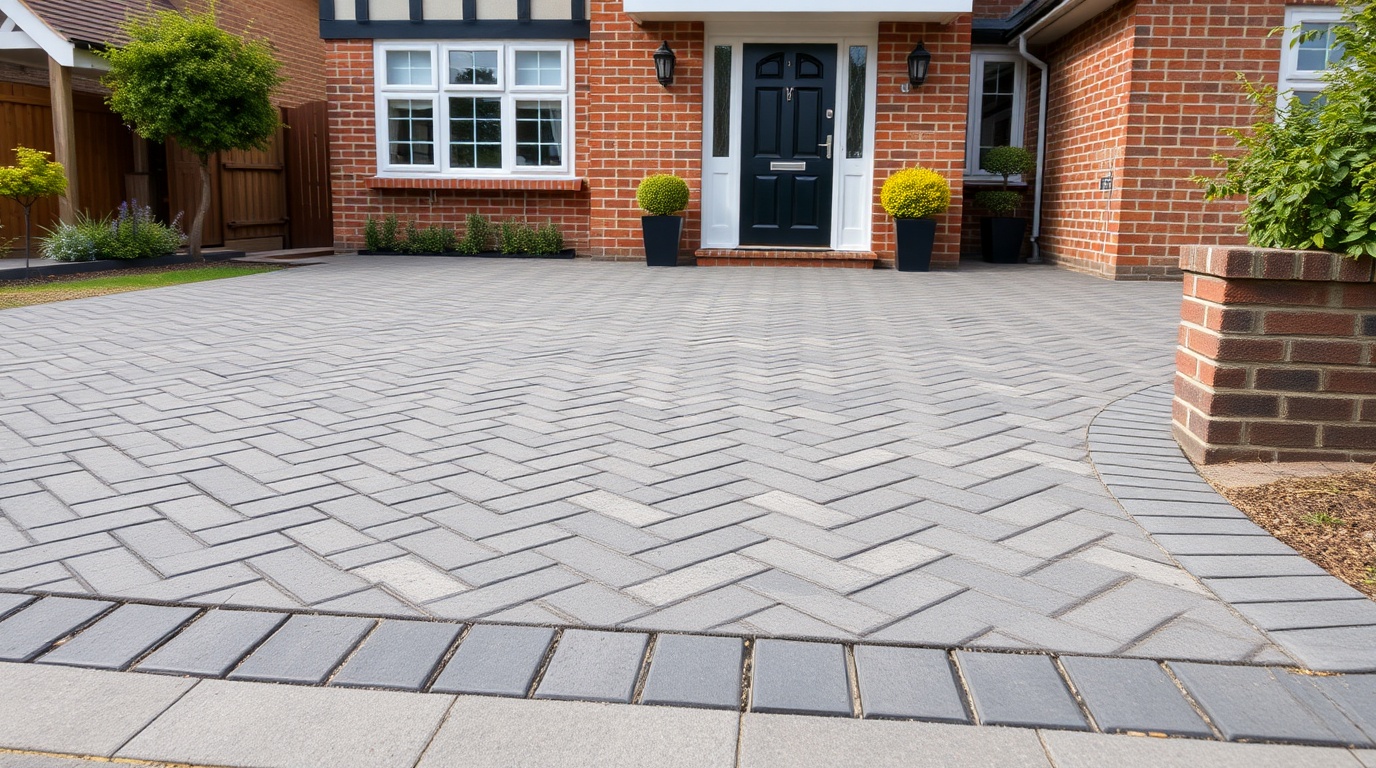
Block paving is the default for most UK driveways because it looks decorative, comes in many colours and patterns, and — crucially — individual blocks can be lifted and reset, so a sunken or stained patch can be repaired without redoing the whole drive. A permeable block build can also let rainwater through, which helps meet the front-garden drainage rules. Poured concrete is a single continuous slab: it is strong and can be lower in material cost, but a repair or a crack is hard to hide, and because it is impermeable, a front-garden drive normally needs drainage designed in. Both rely on a properly excavated, compacted sub-base to last.
| Surface | Typical cost | Repairs | Drainage |
|---|---|---|---|
| Block paving | ~£80–£140 / m² | lift & reset individual blocks | permeable option available |
| Poured concrete | often lower material cost | patches and cracks tend to show | impermeable — needs drainage designed in |
General comparison for guidance. Costs depend on site, block grade and ground works. Sources: trade cost guides and Planning Portal drainage guidance.
How to choose for your home
- Want it decorative and easy to mend? Block paving lets you lift and reset blocks rather than redo the surface.
- Want a plain, hard-wearing slab? Poured concrete can suit a utilitarian drive, but plan for cracking and harder repairs.
- Front garden over 5m²? A permeable block build, or drainage to a soakaway, helps keep the job within the planning rules — an impermeable concrete slab draining to the road usually does not (see the planning page).
- Tight upfront budget? Concrete blocks are usually the lowest-priced route into a decorative finish.
Frequently asked questions
Is block paving or concrete better for a driveway?
Block paving is decorative and individual blocks can be lifted and reset if one sinks or stains, and a permeable build can meet the front-garden drainage rules. Poured concrete is a hard-wearing continuous slab and can be lower in material cost, but repairs and cracks tend to show and it is impermeable. The right choice depends on your budget, the look you want and how you handle drainage.
Can a block paving driveway be repaired?
Yes — one of its advantages is that individual blocks can be lifted and reset, so a sunken or stained area can be repaired without redoing the whole driveway, provided the sub-base underneath is sound.
Does a concrete driveway need extra drainage?
Poured concrete is an impermeable surface, so a front-garden driveway over 5m² that drains straight to the road usually needs drainage designed in — such as channel drains and a soakaway — to stay within the planning rules. A permeable block build can avoid that.
Sources & further reading
Figures on this page are typical UK ranges drawn from published sources and depend on your specific site. They are guidance, not a quotation.