The short answer
Block paving is laid as individual blocks over sand and a sub-base, while a resin-bound driveway mixes natural aggregate with a clear resin and trowels it over a solid base to form a smooth, jointless surface. The key differences are finish and maintenance. Resin-bound is seamless and weed-resistant because there are no joints for weeds or moss to colonise, and a correctly specified resin-bound system is permeable, letting water soak through. Block paving offers more pattern and colour and lets you lift and relay individual blocks to fix a sunken patch or reach a buried pipe. Resin needs a sound base (often existing concrete or fresh tarmac), so block paving can be more forgiving on a poor sub-base. Choice comes down to look, upkeep tolerance and budget.
Resin-bound surfacing has grown popular as an alternative to block paving, so many UK homeowners now weigh the two. This page compares them on the points that matter.
Quick comparison
- Block paving finishPatterned, jointed
- Resin-bound finishSmooth, seamless
- Weeds in jointsPossible in block paving
- Resin-bound permeabilityPermeable when correctly laid
- Spot repairsEasier with block paving
How each surface is built
Understanding the build explains the practical differences.
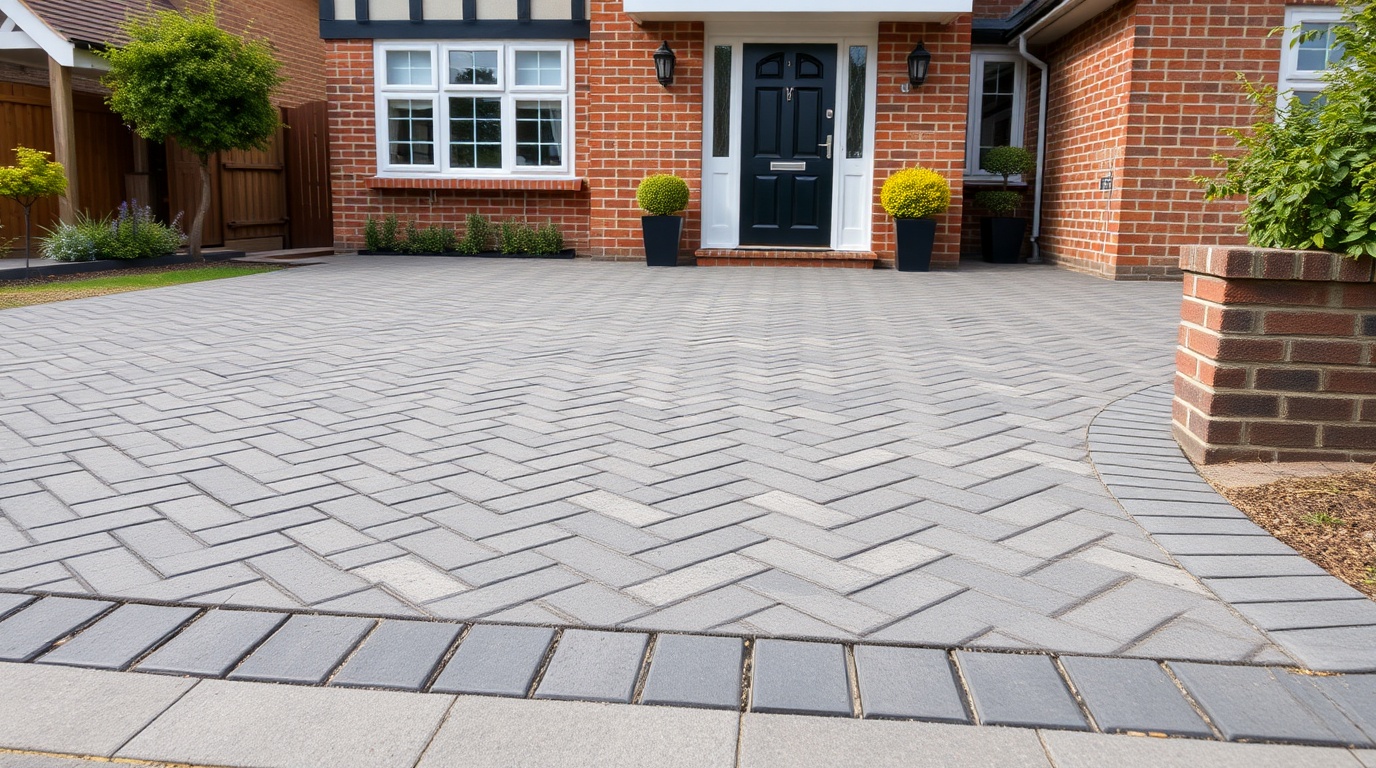
- Block paving sits on a compacted sub-base and a sand laying course, with blocks set by hand and joints filled with kiln-dried sand. An edge restraint holds the perimeter. It is a flexible surface made of many separate units.
- Resin-bound surfacing needs a strong, stable base — typically existing sound concrete, or freshly laid tarmac or a permeable base course. Natural aggregate is mixed with a clear UV-stable resin and hand-trowelled across the base to a smooth, continuous finish. Because the aggregate is fully coated and bound, the surface has no loose stones (unlike resin-bonded, which is scattered stone over resin).
The crucial point: resin-bound relies on the base beneath it. If your existing base is poor, it must be replaced or repaired first, which adds cost. Block paving brings its own full build-up, so it can be installed on ground that would not be suitable for resin without groundworks.
Cost, maintenance and drainage
On cost, the two are often broadly comparable per square metre, with the final figure driven heavily by the state of the existing base for resin and by pattern complexity for block paving. Where a sound base already exists, resin can be quick to lay; where a full new base is needed, costs rise.
On maintenance, resin-bound has a genuine advantage: with no joints, there is little for weeds or moss to root into, and the smooth surface is easy to sweep and wash. Block paving's sand-filled joints can lose sand over time, let weeds in, and benefit from periodic re-sanding, weed treatment and sealing. Both can be jet-washed, though resin should be cleaned with appropriate care to avoid dislodging aggregate.
On drainage, a properly specified resin-bound system is permeable, with water passing through the surface and into a free-draining base — helpful for meeting UK rules on front driveways that would otherwise need planning permission. Block paving can also be permeable when laid with permeable jointing and sub-base. So both can be made SuDS-friendly, but the detail of the build matters.
| Factor | Block paving | Resin-bound |
|---|---|---|
| Finish | Patterned, jointed | Smooth, seamless |
| Design choice | Colours, patterns, borders | Aggregate blends, fewer patterns |
| Weeds / moss | Possible in joints | Low (no joints) |
| Permeable option | Yes (permeable system) | Yes (resin-bound is permeable) |
| Base requirement | Brings own sub-base | Needs sound existing or new base |
| Spot repairs | Lift and relay blocks | Patch and blend resin section |
Indicative comparison for guidance only.
Repairs, appearance and which suits your home
Repairs are where block paving's individual units shine. A sunken area can be lifted, the base corrected and the same blocks relaid, leaving little trace. If a utility company digs a trench, block paving can be reinstated almost invisibly. Resin-bound can be patched and blended, but matching a repair perfectly into a continuous surface is harder, and any patch may be faintly visible.
Appearance is a matter of taste. Block paving suits homes that want defined pattern, contrasting borders and a traditional or formal look. Resin-bound gives a clean, contemporary, seamless finish in a range of natural aggregate colours, with a flush surface that is comfortable underfoot and easy for prams or wheelchairs.
Which suits your home? Choose resin-bound if you want a smooth, low-weed, modern surface and you have (or will build) a sound base. Choose block paving if you value pattern and colour, easy individual repairs, and a build that brings its own sub-base. Both can be specified as permeable to satisfy front-drive drainage rules, so weigh look, upkeep and the condition of your existing base rather than assuming one is universally better.
Durability, weather and how each surface ages
Both surfaces are designed to last many years, but they age differently and respond differently to the British climate, which is worth understanding before you commit.
Block paving ages by movement and joints rather than by surface wear. Quality concrete and clay blocks are extremely hard-wearing underfoot and under tyres, so the blocks themselves rarely wear out. Instead, the things that change over time are the joints (sand can wash out and need topping up), the levels (poorly built drives can rut or settle), and colour (concrete blocks can soften in tone over years, while clay blocks hold their fired colour). The great advantage is that all of these are fixable: re-sand the joints, lift and relevel a sunken area, or swap a stained block. A block drive can be brought back close to new condition without full replacement.
Resin-bound ages by the surface and the bond. A correctly installed, UV-stable resin holds its colour and integrity well, and the seamless finish stays weed-free. The risks come from poor installation or a failing base: if water gets trapped because the base is not free-draining, or if the resin was laid too thin or in unsuitable weather, the surface can suffer loss of stones (ravelling), cracking that mirrors movement in the base, or cloudiness from a non-UV-stable resin. Because the surface is continuous, a localised failure is harder to repair invisibly than a single block.
Weather during installation is a practical difference. Resin-bound must be laid in dry conditions within a temperature window, as moisture and cold affect the cure — which can mean waiting for a suitable dry spell in the UK. Block paving is more tolerant of laying conditions, though a proper compacted, well-drained base is still essential in either case. Over a full lifespan, both can serve well; the decision again comes down to the look you prefer, your tolerance for joint maintenance versus reliance on a sound base, and how easily you want to be able to repair the surface in future.
Frequently asked questions
Is a resin driveway better than block paving?
Neither is universally better. Resin-bound gives a smooth, seamless, low-weed finish and is permeable when laid correctly, but relies on a sound base. Block paving offers more pattern and lets you lift and relay individual blocks for repairs. The right choice depends on look, upkeep tolerance and your existing base.
Do resin driveways get weeds like block paving?
Far less. A resin-bound surface has no joints for weeds or moss to root into, so weeds are uncommon compared with the sand-filled joints of block paving. Block paving joints can be re-sanded and treated, but resin-bound is lower-effort on this point.
Can resin be laid over existing block paving?
Not directly in most cases, because resin-bound needs a solid, stable, continuous base. Loose or moving block paving would not provide that. A surveyor would assess whether the existing surface can be used, repaired or must be replaced before resin is applied.
Sources & further reading
- Marshalls — Driveway paving guidance
- HomeOwners Alliance — Driveway ideas and costs
- Planning Portal — Paving your front garden
Figures on this page are typical UK ranges drawn from published sources and depend on your specific site. They are guidance, not a quotation.