The short answer
Block paving uses individual concrete or clay blocks laid in a pattern over a compacted sub-base and sand, while tarmac is a single poured-and-rolled layer of bitumen-bound aggregate. The trade-off is straightforward. Tarmac is cheaper and faster to lay, gives a smooth seamless finish and copes well with large areas, but offers little design choice and can soften in very hot weather. Block paving costs more and takes longer, yet delivers far more colour, pattern and kerb appeal, and a key practical advantage: individual blocks can be lifted and relaid to fix a sunken patch or access a buried pipe. For a plain, budget-driven surface tarmac wins; for appearance, repairability and resale value, block paving is usually the stronger choice.
Both surfaces are long-established UK driveway options, so the decision rests on budget, the look you want and how easy you need future repairs to be. This page sets them side by side.
Quick comparison
- Tarmac costLower per m²
- Block paving costHigher per m²
- Tarmac installFast, often one day
- Block paving installSlower, more labour
- RepairabilityBlock paving easier to spot-fix
How the two surfaces are built
The construction methods are very different, and that difference explains almost every practical distinction between them.
- Block paving is built up in layers: a compacted sub-base of crushed stone, a thin laying course of sharp sand, then individual blocks laid by hand in a chosen pattern. The joints are filled with kiln-dried sand, and an edge restraint holds everything in place. Because each block is a separate unit, the surface is flexible and can move slightly with the ground without cracking across its whole face.
- Tarmac (more precisely a bitumen macadam) is laid as a continuous mat. A sub-base is prepared, then hot bitumen-bound aggregate is spread and compacted with a roller into a single bonded layer. The result is one seamless surface with no joints.
This is the heart of the comparison. Tarmac's single continuous layer is quick to lay and inexpensive, but when it fails it tends to fail as a patch you cannot perfectly match. Block paving's many small units cost more in labour but give you a surface you can take apart and put back together, block by block, for the life of the driveway.
Cost, lifespan and maintenance compared
On cost, tarmac is generally the cheaper option per square metre, partly on materials and partly because it is so much faster to lay — a modest tarmac drive can often be completed in a day, whereas block paving is labour-intensive and takes longer. The larger the area, the more tarmac's cost advantage shows.
On lifespan, both can last well when laid properly on a sound sub-base. Block paving driveways are commonly quoted with a long service life, and because failed blocks can be replaced individually, the surface can effectively be kept going almost indefinitely with spot repairs. Tarmac also lasts many years but tends to be resurfaced rather than patched when it deteriorates across a wider area.
On maintenance, block paving asks more routine attention: joints can lose sand and need re-sanding, and weeds or moss can colonise the joints, so occasional cleaning and re-sealing helps. Tarmac is lower-effort day to day, though it can soften in extreme heat, scuff under sharp turning loads, and oil spills mark it. Neither is maintenance-free, but they fail and are repaired in different ways.
| Factor | Block paving | Tarmac |
|---|---|---|
| Install cost | Higher per m² | Lower per m² |
| Install speed | Slower (hand-laid) | Fast (rolled) |
| Appearance / choice | Colours, patterns, borders | Plain black, limited choice |
| Spot repairs | Lift and relay blocks | Patching, hard to match |
| Routine upkeep | Re-sand joints, weed, seal | Low, but softens in heat |
| Permeable option | Yes (permeable blocks/joints) | Porous asphalt available but less common |
Indicative comparison for guidance only.
Appearance, drainage and which suits your home
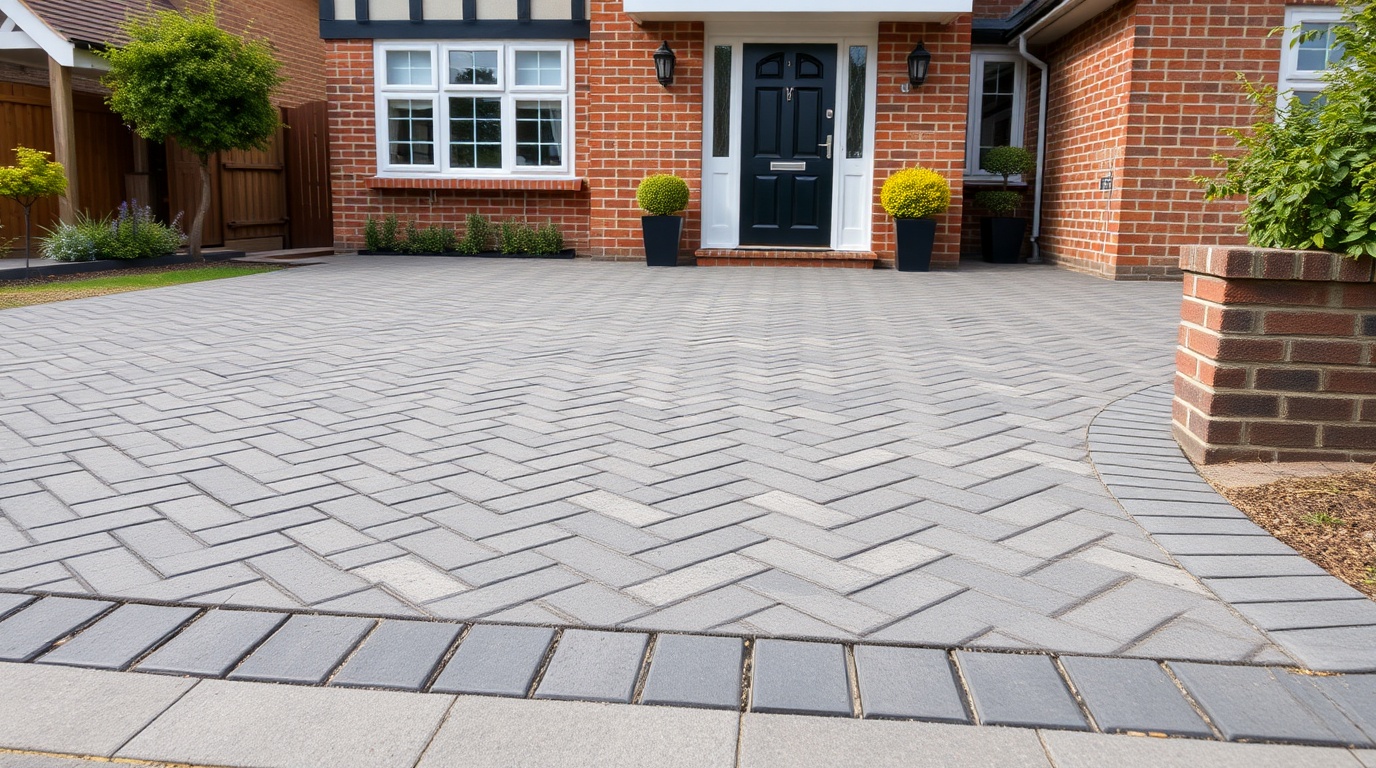
Appearance is where block paving pulls ahead for many homeowners. It comes in a wide range of colours, shapes and laying patterns (herringbone, basketweave, stretcher bond), with contrasting borders and edging that lift the look of a property. Tarmac is essentially a uniform black or dark grey finish; it can look clean and smart, especially on larger drives, but offers little scope to personalise.
Drainage is increasingly important under UK rules. A front driveway over five square metres that drains to the road can trigger planning permission, so a surface that lets water soak away on site matters. Block paving can be specified as permeable, with wider joints filled with permeable grit and a free-draining sub-base, allowing rain to percolate through. Porous asphalt exists too but is less commonly offered for domestic drives, so block paving is often the more readily available permeable choice.
Which suits your home? If your priority is the lowest cost and a plain, practical surface over a large area, tarmac is hard to beat. If you want kerb appeal, the ability to repair individual blocks, a permeable build, and potentially a stronger effect on resale value, block paving is usually worth the extra. Many homeowners weigh a smart appearance and future repairability against the lower upfront price of tarmac and decide accordingly.
Installation, ground preparation and what affects each surface's lifespan
Whichever surface you choose, the single biggest factor in how long it lasts is the sub-base beneath it. Both block paving and tarmac sit on a compacted layer of crushed stone (typically MOT Type 1) over a prepared, excavated formation. If that sub-base is too shallow, poorly compacted, or laid on soft or waterlogged ground, both surfaces will fail early — block paving by rutting and sinking, tarmac by cracking and crazing. A common cause of disappointing driveways of either type is corner-cutting at this hidden stage, so it is worth understanding what a proper build involves before comparing quotes.
For tarmac, good practice is to lay it in layers — a coarser base course and a finer wearing course — over the compacted sub-base, rolling each while hot so it bonds and compacts properly. Edges should be supported (against a kerb, channel or haunched concrete) so the mat does not crumble at the perimeter, which is where tarmac most often starts to break up. A drive laid as a single thin skim of tarmac over weak ground is the version that fails within a few years.
For block paving, the build adds a laying course of sharp sand and, critically, edge restraints bedded in concrete around the perimeter. Without these restraints the blocks spread outwards under traffic, the joints open, and the pattern creeps and sinks. The blocks are vibrated in with a plate compactor and the joints filled with kiln-dried sand. Falls (gentle slopes) must be set so water runs off rather than ponding. Get these elements right and a block drive performs for decades; skip them and it disappoints regardless of the quality of the blocks.
The takeaway is that the surface material is only half the story. A well-built tarmac drive can comfortably outlast a poorly built block one, and vice versa. When weighing block paving against tarmac, give as much attention to the depth and quality of the sub-base and edge detailing described in a quote as to the headline surface choice, because that is what truly determines durability and value over the life of the driveway.
Frequently asked questions
Is block paving more expensive than tarmac?
Generally yes. Block paving costs more per square metre and takes longer to install because it is hand-laid, while tarmac is rolled out quickly. The gap widens on larger areas. Block paving's higher cost buys more design choice and easier spot repairs.
Which lasts longer, block paving or tarmac?
Both can last a long time when laid on a properly compacted sub-base. Block paving has an edge in longevity because individual damaged blocks can be replaced indefinitely, whereas tarmac is usually resurfaced once it deteriorates over a wider area.
Can both block paving and tarmac be made permeable?
Yes. Block paving can be laid as a permeable system with special jointing and a free-draining sub-base, and porous asphalt is available too, though it is less commonly offered for domestic driveways. A permeable surface can avoid the need for planning permission on front drives.
Sources & further reading
- Marshalls — Driveway paving guidance
- HomeOwners Alliance — Driveway ideas and costs
- Planning Portal — Paving your front garden
Figures on this page are typical UK ranges drawn from published sources and depend on your specific site. They are guidance, not a quotation.