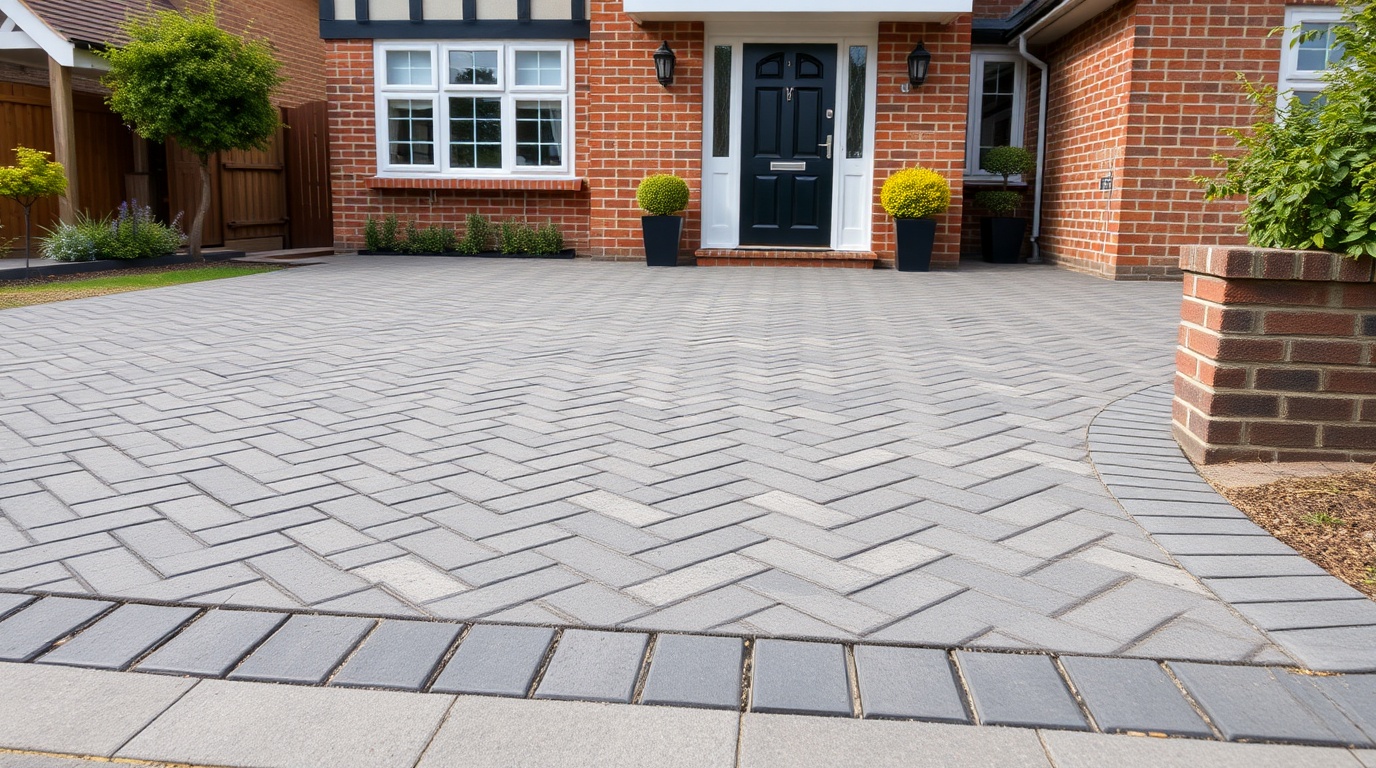
The short answer
Yes, you can pave over your front garden — but the drainage decides whether you need planning permission. Under rules in force since 2008, you can pave a front garden of any size without planning permission if you use a permeable or porous surface (so rain soaks through on site), or if you direct the run-off to a permeable area on your land such as a soakaway, border or lawn. You need planning permission only if you cover more than five square metres with a non-permeable surface that drains to the road. So paving over the front garden is allowed; the practical advice is to choose a permeable build (or plan on-site drainage) to keep within permitted development and avoid worsening local flooding.
Paving over a front garden for parking or low maintenance is common, but the rules focus on where the rainwater goes. This page explains what you can do and how to stay within permitted development.
Quick reference
- Permeable surface, any sizeNo permission needed
- Impermeable over 5m² to roadPermission needed
- Run-off to soakaway/borderNo permission needed
- Rule introduced2008
- Dropped kerb (if crossing pavement)Separate council approval
What the rules allow
You are generally free to pave over a front garden — to create off-street parking, reduce maintenance, or both. The controls are not about whether you can pave, but about how the rainwater is managed, because hard surfaces that shed water to the road contribute to flooding and overload drains.
The rules, in place since 2008, work like this:
- Use a permeable or porous surface (permeable block paving, resin-bound over a permeable base, gravel, porous asphalt) and you can pave a front garden of any size without planning permission.
- Direct the run-off to a permeable area on your own land — a soakaway, planted border, rain garden or lawn — and again you do not need permission, even with an impermeable surface.
- Use a non-permeable surface (standard concrete, standard tarmac, standard block paving) that drains to the road over an area greater than five square metres, and you do need planning permission.
So the headline answer is yes, you can pave your front garden — and you can usually do it without an application by choosing a surface and drainage approach that keep the water on your land.
Drainage, design and good practice
Beyond the planning rule, there are practical and environmental reasons to think carefully about paving a front garden.
Drainage. The simplest way to comply and to avoid problems is a permeable build — a surface that lets rain soak through into a free-draining sub-base. Where the surface is impermeable, plan a soakaway or permeable border sized to take the run-off. On heavy clay soils, permeable surfaces and soakaways work less well, so drainage may need careful design and a percolation assessment.
Keep some greenery. Government guidance encourages retaining planting where possible — a fully paved front garden loses the flood-buffering, cooling and biodiversity benefits of soil and plants. A permeable surface with planted borders or a rain garden balances parking with these benefits.
Don't push water onto neighbours. Your paving must not direct surface water onto a neighbour's property or the highway in a way that causes a nuisance. Falls and drainage should keep water on your land.
| What you do | Planning permission? |
|---|---|
| Permeable surface, any size | Not needed |
| Run-off to soakaway / border on site | Not needed |
| Impermeable surface, 5m² or less | Not normally needed |
| Impermeable surface over 5m², drains to road | Needed |
| Listed building / Article 4 area | Check — may be needed regardless |
Indicative guidance only — confirm with your local planning authority.
Other consents and when to check
Even though paving a front garden is usually permitted development, a few situations need extra care:
- Listed buildings: works at a listed property or its curtilage can require listed building consent, even for paving.
- Article 4 directions and planning conditions: these can remove permitted development rights in certain areas or on certain estates, meaning you must apply even for a permeable drive.
- Flats and maisonettes: different rules apply than for houses.
- Conservation areas: a ground-level permeable surface is often still allowed, but extra controls can apply.
- Dropped kerb: if paving the front garden is to create parking, and you need to drive across a pavement or verge, you need a separate vehicle crossover approved by the council's highways department — this is independent of the paving rules.
- Trees: protected trees (Tree Preservation Orders) or trees in a conservation area may restrict paving near roots; check before excavating.
If anything is uncertain, your local planning authority can confirm whether permitted development applies, and a Lawful Development Certificate gives formal proof. For most standard houses, a permeable front-garden paving scheme — with a council crossover where parking access is needed — can proceed without planning permission while keeping rainwater safely on your land.
Planning the job: surface choice, drainage and a tidy result
Once you know paving over the front garden is allowed, the practical decisions are about choosing a surface that stays within the rules, draining it properly, and ending up with something that looks good and lasts. A little planning at the start prevents the most common regrets.
Match the surface to the drainage approach. The cleanest route to compliance is a genuinely permeable surface — permeable block paving, resin-bound over a permeable base, or gravel — so rain soaks away through the build and no separate drainage feature is strictly needed. If you prefer an impermeable surface such as standard block paving or tarmac for cost or looks, you must plan where the water goes: a sized soakaway, a permeable border or a rain garden on your own land. Deciding this before work starts avoids the trap of a finished impermeable drive that sheds water to the road and technically needed permission.
Build it to drain and to last. Whichever surface you pick, the foundation matters. A permeable drive needs an open-graded, free-draining sub-base, not a tightly sealed one, so it can actually absorb a downpour; an impermeable drive needs correct falls towards its soakaway or border. On heavy clay, a percolation check is worth doing because slow-draining ground can defeat both permeable surfaces and soakaways without extra storage. Edge restraints keep the surface contained and stop gravel or blocks migrating into beds and onto the pavement.
Keep some green and think about kerb appeal. A fully sealed front garden looks stark, sheds the most water, and loses the cooling and wildlife value of planting. Retaining borders, a small bed or a permeable strip softens the look, helps drainage and aligns with the government guidance encouraging greenery in front gardens. Combining a permeable parking area with planting often gives the best of both — usable off-street space, compliant drainage, and a front garden that still feels like part of the home rather than a slab of hardstanding. Plan the layout, drainage and any crossover together, and the result is a front garden you can pave over with confidence, lawfully and attractively.
Frequently asked questions
Can I pave my whole front garden without planning permission?
Yes, if you use a permeable surface or direct run-off to a permeable area on your land. There is no area limit for permeable surfacing. You only need permission if you cover more than five square metres with a non-permeable surface that drains to the road.
What is the 5 square metre rule for front gardens?
Since 2008, surfacing a front garden of more than five square metres with a non-permeable material that drains to the road requires planning permission. Using a permeable surface, or draining the water to a permeable area on your own land, keeps you within permitted development regardless of size.
Do I need permission to pave the front garden for parking?
Paving itself usually needs no permission if it is permeable or drains on site. But creating off-street parking that requires driving across a pavement also needs a separate dropped kerb (vehicle crossover) approved by the council's highways department before you can legally use it.
Sources & further reading
- Planning Portal — Paving your front garden
- gov.uk — Permeable surfacing of front gardens guidance
- HomeOwners Alliance — Do I need planning permission?
Figures on this page are typical UK ranges drawn from published sources and depend on your specific site. They are guidance, not a quotation.