The short answer
You can lay block paving yourself, and a small patio or path is a realistic DIY project for a capable, fit person — but a driveway is far harder than it looks. The blocks are the easy part; the difficulty is in the unseen stages: excavating to the right depth, removing spoil, getting the falls right, compacting a MOT Type 1 sub-base in layers, and screeding a true laying course. Those stages need a plate compactor (hired), a block splitter or disc cutter, and a lot of heavy lifting and barrowing. Mistakes in the base show up as sinking and standing water later. For a small area on firm ground, DIY is sensible; for a driveway, soft ground or drainage worries, professional installation usually pays off.
Block paving is achievable for a confident DIYer, but the groundwork — not the laying — is what separates a drive that lasts from one that sinks. Here is an honest view of what it involves.
DIY block paving
- Realistic DIYSmall patio / path
- Hardest stagesExcavation, falls, sub-base
- Key hired toolVibrating plate compactor
- CuttingBlock splitter / disc cutter
- Hire a pro forDriveways, soft ground, drainage
The blocks are the easy part
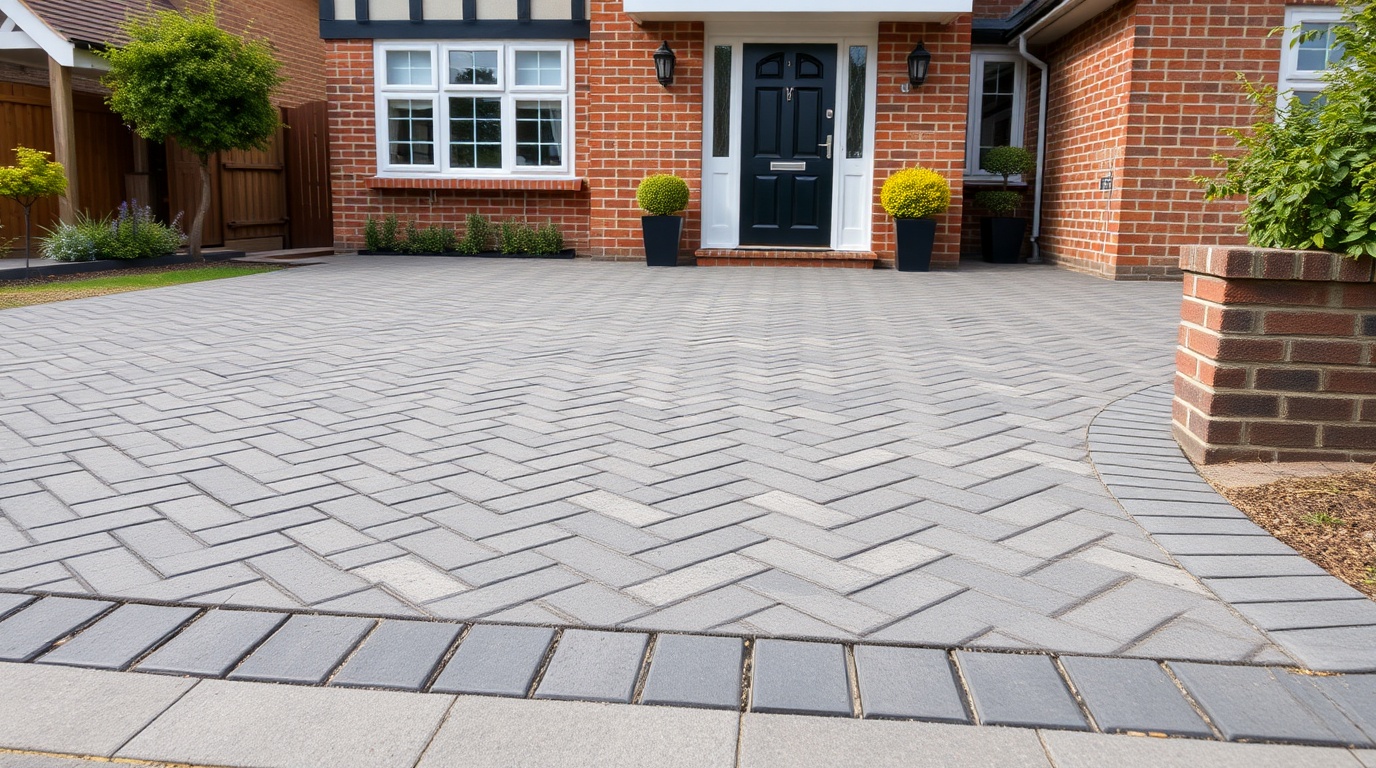
The visible task — placing blocks in a herringbone or stretcher pattern — is genuinely satisfying and well within a careful DIYer's reach. What catches people out is everything beneath it. A durable result depends on excavating to the correct depth, setting accurate falls so water drains away from the house, laying and compacting the sub-base in layers, and screeding a true laying course so the finished surface is flat. None of these are visible once the blocks are down, and all of them are easy to get subtly wrong. A base that is a little soft, a fall that is slightly off, or a laying course that dips will not show on day one — it shows months later as ruts, rocking blocks and puddles.
Tools, effort and the cutting problem
Block paving is physically demanding. Expect heavy digging, barrowing tonnes of spoil out and tonnes of sub-base in, and bending to lay every block. You will need or hire several key items: a vibrating plate compactor (essential, and hired by the day), a block splitter or disc cutter for the edges and curves, a long screed rail and straightedge, string lines and pegs, a rubber mallet, and basic groundwork tools. Cutting is where many DIY drives look amateurish — neat, accurate cuts around edges, manholes and curves take practice, and a disc cutter brings dust, noise and a real need for eye, ear and respiratory protection.
- Spoil: excavated material has to go somewhere — a skip or grab lorry, which is a cost and a logistics job in itself.
- Compaction: the plate compactor is not optional; hand-tamping cannot replicate it for a driveway.
- Materials handling: sub-base and blocks arrive by the tonne and pallet; you need access and somewhere to store them.
For a small patio or path on firm ground, all of this is manageable over a weekend or two with help. For a full driveway, the scale of digging, spoil removal and cutting is a large undertaking.
Rules, drainage and when to call a professional
Beyond the physical work, a couple of rules matter for DIY driveways. A new or replacement front driveway that drains rainwater to the road can require planning permission unless it is built with permeable paving or the surface water is directed to a permeable area or soakaway within the property — a rule introduced to reduce surface water flooding. So a DIY drive is not just a construction question; you need to plan the drainage from the start. The finished surface must also sit at least 150mm below the damp-proof course and clear of air bricks, or you risk pushing damp into the house, which is a serious and expensive mistake to undo.
So when does it make sense to call a professional rather than DIY? The honest answer is whenever the stakes or the difficulty rise. A driveway involves loads, drainage and large volumes of material that reward experience; soft, clay or made ground needs judgement about how deep to dig and whether a capping layer is required; and any job where drainage or proximity to the house is awkward is one where a mistake is costly to fix. A good installer also brings the right plant, disposes of spoil efficiently, and gets neat cuts and falls that are hard to achieve first time. For a confident, fit DIYer tackling a modest patio on sound ground, doing it yourself can save a meaningful sum and produce a fine result. For a driveway — especially on poor ground or with tricky drainage — the cost of professional installation usually buys a longer-lasting surface and avoids the expensive failures that come from a base that was not quite right.
A realistic look at a DIY patio versus a driveway
It helps to separate the two jobs people lump together as block paving, because the gap between them is large. A small patio or path that only carries foot traffic is the achievable end of DIY. The sub-base is thinner, the loads are light, the consequences of a slightly imperfect fall are minor (a puddle, not structural failure), and the area is small enough to lay and joint in a manageable session or two. With care over levels, a hired plate compactor, and patience with the cutting, a competent DIYer can produce a patio they are pleased with and save a worthwhile amount on labour.
A driveway is a different proposition, and it is worth being honest about why. The scale of excavation and spoil removal alone — digging out and carting away several cubic metres of material, then bringing in and barrowing tonnes of sub-base — is heavy, time-consuming work that most people underestimate. The loads are real: a car concentrates weight in the wheel tracks, so any weakness in the base shows up quickly and expensively. Drainage and levels must be right against the house and the road, with the planning rule on surface water to satisfy. And the cutting and edge detailing that make a drive look professional take practice that a one-off job does not provide. None of this makes a DIY driveway impossible — capable, determined people do build them — but the margin for error is small and the cost of getting the base, falls or drainage wrong is high. The sensible self-assessment is to ask honestly whether you can excavate to depth, set accurate falls, compact a sound sub-base in layers, and solve the drainage. If yes, a DIY patio is very reasonable and a DIY driveway is feasible with help and the right plant. If you are unsure on any of those, the part to hand to a professional is precisely the groundwork — and on a driveway, that is most of the job.
Frequently asked questions
Is a DIY block paving driveway worth it?
It can save on labour, but a driveway is a large, physical job where base, falls and drainage mistakes are costly to fix. Many people DIY a patio successfully but bring in a professional for a driveway, especially on soft ground.
Do I need a plate compactor to lay block paving?
Effectively yes. A vibrating plate compactor is needed to compact the sub-base in layers and to vibrate the blocks and jointing sand in. Hand-tamping cannot achieve the same result, and skipping it leads to sinking and rocking blocks.
Do I need permission to lay my own driveway?
Possibly. A new or replacement front driveway that drains to the road can need planning permission unless it uses permeable paving or directs water to a soakaway or permeable area within the property. Check before you start.
Sources & further reading
- Planning Portal — paving your front garden
- Pavingexpert — DIY block paving method
- HomeOwners Alliance — driveways advice
Figures on this page are typical UK ranges drawn from published sources and depend on your specific site. They are guidance, not a quotation.