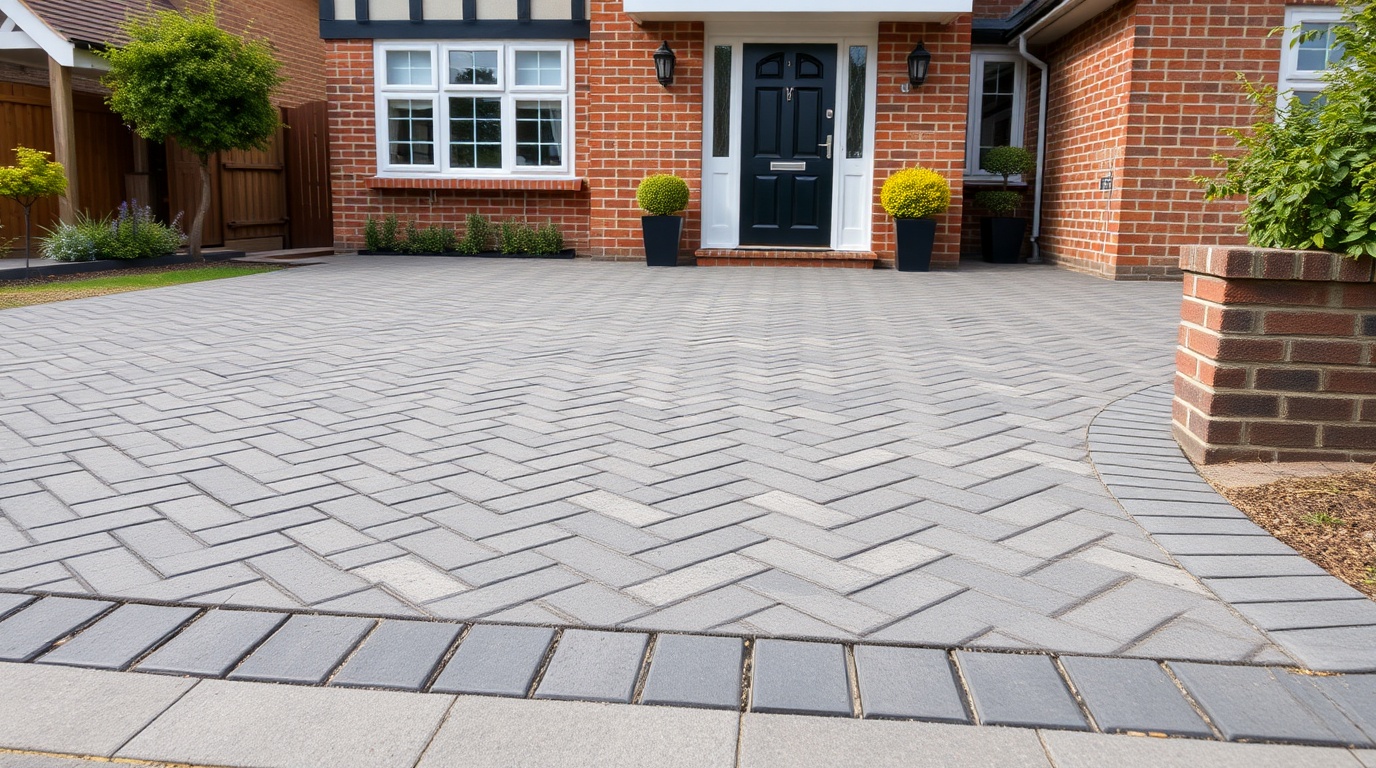
The short answer
Clay pavers are made from natural clay fired at high temperature, giving a colour that runs right through the block and will not fade, with a rich, traditional appearance. Concrete pavers are moulded from cement, sand and aggregate with pigments, offering a wider range of colours, shapes and prices but a surface colour that can fade over the years as the top layer weathers. The trade-offs: clay holds its colour and develops character but costs more and is harder to cut; concrete is cheaper, more versatile and easier to work but can lose colour intensity over time. Both are durable and suit driveways and patios. Clay suits a long-term, fade-proof, premium look; concrete suits budget and design flexibility.
Block paving comes in two main materials, clay and concrete, and the choice affects colour fastness, cost and longevity. This page explains the differences.
Quick comparison
- Clay colourFired through, will not fade
- Concrete colourPigmented; can fade over time
- Clay costHigher
- Concrete costLower, more choice
- CuttingConcrete easier; clay harder
How clay and concrete pavers are made
The manufacturing method explains the key differences.
- Clay pavers are formed from natural clay and fired in a kiln at high temperature, much like bricks. The colour comes from the clay and firing, so it runs right through the block and is permanent — it does not rely on a surface coating or pigment that can wear away.
- Concrete pavers are made by mixing cement, sand and aggregate with colour pigments, then moulding and curing them. The pigment colours the block, often concentrated in a top face layer, which can mean the most intense colour is at the surface.
This single difference — fired natural colour versus added pigment — is why clay holds its colour indefinitely while concrete's surface colour can soften over years of weathering and UV exposure. It also influences cost, workability and the range of shapes and shades available, as the sections below explain.
Colour, strength and longevity
On colour fastness, clay is the clear winner. Because the colour is fired through, clay pavers keep their appearance for the life of the surface and weather gracefully. Concrete pavers can fade over time as the surface layer weathers, with the colour gradually becoming less intense — noticeable on some products after several years, less on others.
On colour range, concrete is more versatile: pigments allow a very wide palette of colours, blends, shapes and textures, including styles that mimic stone or weathered finishes. Clay offers a narrower but characterful range of natural earthy tones — reds, browns, buffs, blues — prized for their authenticity.
On strength and durability, both are robust and made to carry vehicle loads. Clay is very hard and abrasion-resistant; concrete is strong and reliable. Both last a long time on a sound sub-base, and both share block paving's great advantage — individual units can be lifted and relaid for repairs.
On maintenance, both need the usual block-paving upkeep: joint re-sanding, weed treatment and cleaning. Clay's fade resistance means it needs less concern about colour loss, while concrete may show its age sooner on colour but is just as practical.
| Factor | Clay pavers | Concrete pavers |
|---|---|---|
| Colour | Fired through, permanent | Pigmented, can fade |
| Colour range | Natural earthy tones | Very wide, many styles |
| Cost | Higher | Lower |
| Strength | Very hard, abrasion-resistant | Strong, reliable |
| Cutting / shapes | Harder, fewer shapes | Easier, many shapes |
| Longevity of look | Excellent (no fade) | Good (may soften in colour) |
Indicative comparison for guidance only.
Cost, cutting and which suits your project
On cost, concrete pavers are generally cheaper, which is a major reason they are the more common choice for UK driveways. Clay pavers cost more, reflecting the firing process and their premium, fade-proof finish.
Cutting and laying differ in practice. Clay is very hard, so it is more difficult and time-consuming to cut, and it comes in fewer shapes, which can make complex patterns and edges more demanding. Concrete is easier to cut and is produced in a wide variety of shapes and sizes, giving installers more flexibility for patterns, borders and curves.
Which suits your project? Choose clay pavers if you want a premium, traditional, fade-proof finish that holds its colour for decades and you accept the higher cost and harder cutting. Choose concrete pavers if you want a wider choice of colours and shapes, a lower price and easier installation, accepting that the surface colour may soften over the years. Both deliver a durable, repairable block-paved surface; the decision comes down to budget, the look you want and how much colour permanence matters to you.
Laying, jointing and getting the best from either paver
Whichever material you choose, the way the pavers are laid matters as much as the blocks themselves, and the principles are the same for clay and concrete. Both rely on a properly built foundation to perform for decades.
The base. A block-paved drive needs an excavated, firm formation topped with a compacted sub-base (commonly MOT Type 1) of adequate depth for the loads it will carry, then a thin laying course (usually sharp sand or grit) over which the blocks are laid. Edge restraints — concrete-bedded kerbs or edging courses around every exposed edge — stop the blocks creeping outward under traffic. Falls are set so rainwater runs off to a drain or, for a permeable build, soaks down through the joints. Skimp on any of these and even the best pavers will rut, spread or pool water.
Jointing. Once laid, the joints between blocks are filled, typically with kiln-dried sand brushed in and vibrated down, or a polymeric jointing sand that stiffens to resist washout and weeds. Full, well-compacted joints lock the blocks together so the surface behaves as one interlocking layer rather than loose units. Clay pavers, being precisely sized and hard, give crisp narrow joints; concrete pavers, with their wider choice of shapes, suit a range of joint patterns. Keeping joints topped up over time is the single most useful piece of upkeep for both.
Getting the best from each. With clay, the reward for the higher cost and harder cutting is colour that never fades, so it pays to lay it in a pattern you will be happy with long term. With concrete, the flexibility of shapes and colours lets you create borders and features more easily, and sealing (optional) can help slow colour change and make cleaning easier. For both, buying a few spare blocks at installation makes future repairs simple — a damaged or stained block can be lifted and swapped, and having matching stock avoids colour-matching headaches years later. Laid well and lightly maintained, either material gives a long-lived, repairable drive; the clay-versus-concrete choice then comes down to colour permanence, shape choice and budget rather than basic durability.
Frequently asked questions
Do concrete block pavers fade?
They can. Concrete pavers are coloured with pigments, often concentrated in the top layer, so the surface colour can soften over years of weathering and UV exposure. Clay pavers do not fade because their colour is fired right through the block during manufacture.
Are clay pavers more expensive than concrete?
Generally yes. Clay pavers cost more because of the high-temperature firing process and their premium, fade-proof finish. Concrete pavers are cheaper and offer a wider range of colours and shapes, which is why they are the more common choice for UK driveways.
Which is more durable, clay or concrete pavers?
Both are durable and made to carry vehicle loads on a sound sub-base. Clay is very hard and abrasion-resistant with permanent colour, while concrete is strong and reliable but may soften in colour over time. Both can be lifted and relaid individually for repairs.
Sources & further reading
- Marshalls — Block paving
- HomeOwners Alliance — Driveway ideas and costs
- Checkatrade — Block paving cost guide
Figures on this page are typical UK ranges drawn from published sources and depend on your specific site. They are guidance, not a quotation.