The short answer
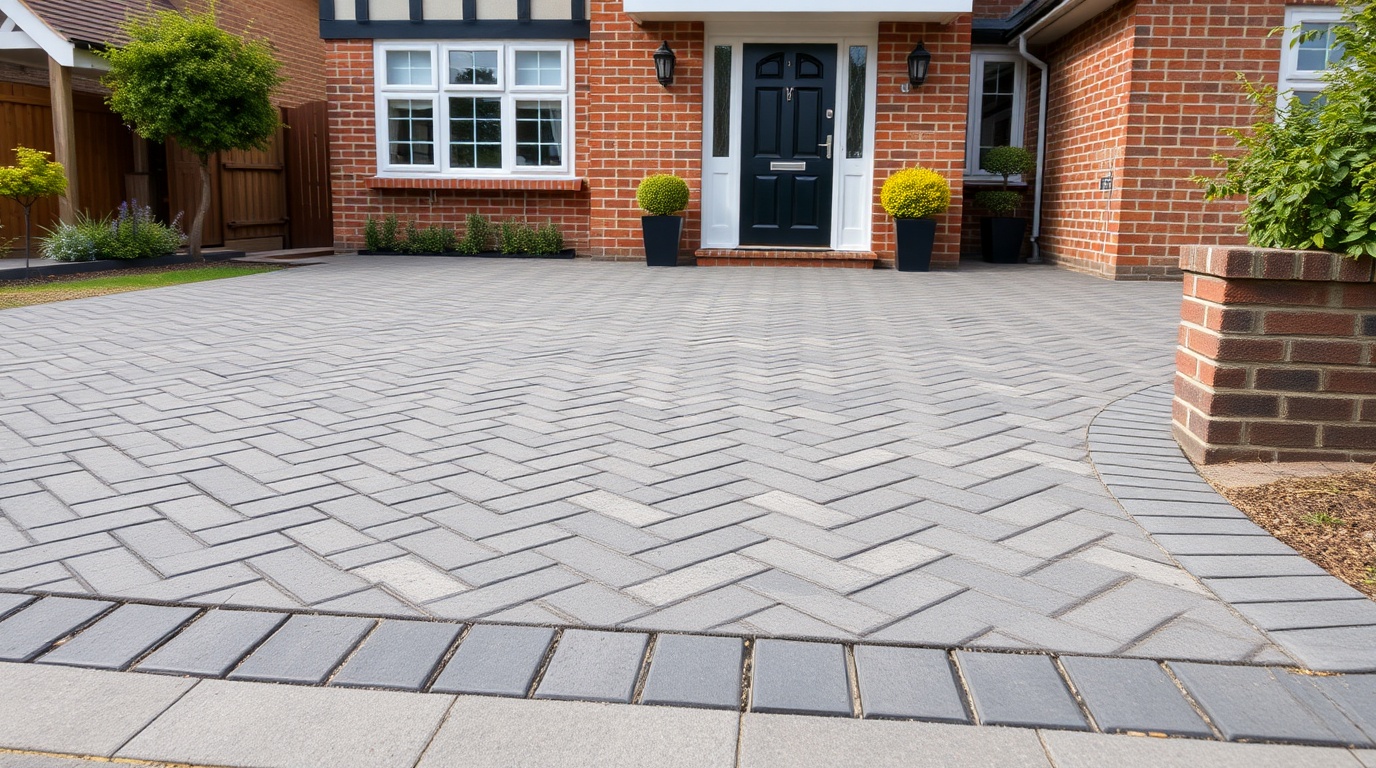
A small block-paved front garden in the UK typically costs in the region of £1,500 to £3,500, depending on size, block type and groundworks. Although the area is small, the rate per square metre is higher than a large driveway, because fixed costs — site set-up, plant, edge restraints and disposal — barely shrink on a tiny job. A compact front garden of around 10–15 m² still needs full excavation, a sub-base, edgings, blocks and jointing. The crucial extra consideration is planning and drainage: paving over a front garden with an impermeable surface larger than 5 m² can require planning permission unless water drains to a permeable area. Using permeable block paving usually keeps the work within permitted development.
Turning a small front garden into off-street parking or a tidy paved area is a popular project, but the economics differ from a big drive. The fixed costs do not scale down, and the planning rules deserve attention before any digging.
Small front garden paving costs
- Typical overall rangeAround £1,500–£3,500
- Typical small areaAround 10–15 m²
- Rate per m²Higher than a large drive
- Planning triggerImpermeable area over 5 m²
- Avoids planning issuePermeable block paving
Why small areas cost more per metre
It feels counter-intuitive, but a small front garden often costs more per square metre to pave than a large driveway. The reason is fixed costs. Many of the expenses on a paving job do not shrink with the area:
- Set-up and mobilisation: getting the crew, tools and materials to site is much the same whether the area is large or small.
- Excavation and disposal: a digger and skip may still be needed, and the per-unit cost of disposal does not fall just because there is less spoil.
- Edge restraints: a small area can have a long perimeter relative to its size, so edging — priced per linear metre — can be a large share of a small job.
- Minimum charges: contractors have a minimum viable day, so a half-day job may still be charged close to a full one.
The blocks and laying labour scale with area, but those fixed elements spread over fewer metres, lifting the effective rate. That is why a small front garden does not cost a small fraction of a big drive.
Indicative front garden costs
The figures below are indicative UK supply-and-lay guidance for a small front garden. Permeable blocks and decorative borders push toward the upper end; simple concrete blocks sit lower.
On a small front garden the fixed costs weigh heavily, so the rate per square metre is typically higher than for a large driveway — set-up, disposal and edge restraints barely shrink with the area. The surface-water rule is the other key factor: paving over a front garden of more than five square metres in a non-permeable way needs either permeable blocks, a soakaway, or drainage to a border, or it requires planning permission. Designing in permeability from the start usually costs less than retrofitting drainage later.
Borders and detailing are where a small front garden gains character but also cost. A contrasting block border, a soldier course along the edges, or a small circular feature all add cutting and labour over a plain single-colour layout. On a compact area these details are a modest part of the total, so many homeowners feel the lift in kerb appeal is worth the small extra over the simplest possible scheme.
| Area | Indicative total (supplied and laid) | Notes |
|---|---|---|
| Around 8–10 m² | Around £1,200–£2,500 | Compact front, simple layout |
| Around 10–15 m² | Around £1,500–£3,000 | Typical small front garden |
| Around 15–20 m² | Around £2,000–£3,500 | Room for one car |
| Permeable upgrade | Adds to the above | Avoids planning issues |
Indicative UK figures for guidance only; small areas carry a higher rate per m².
Planning and drainage you must consider
Front gardens carry a planning rule that does not apply to back gardens, and it is the single most important thing to check before paving:
- The 5 m² rule: since 2008, paving over a front garden with an impermeable surface larger than 5 m² can require planning permission, unless the surface water is directed to a permeable area within the property — such as a border, lawn or soakaway.
- Permeable paving: using permeable block paving, which lets water soak through wide joints into a free-draining sub-base, usually keeps the work within permitted development and avoids the need for an application.
- Why the rule exists: widespread paving of front gardens increased surface-water run-off and urban flooding, so the rules encourage on-site drainage.
- Vehicle access: if you are creating off-street parking, you may also need a dropped kerb across the public pavement — a separate, council-controlled job.
For a small front garden, the practical upshot is that permeable paving or sensible drainage to a border is usually the simplest route, keeping you within the rules and managing rainwater on site. Confirm the planning position and any dropped-kerb requirement before work starts, as retrofitting drainage afterward is more disruptive and costly.
Getting good value from a small project
Because a small front garden carries a high rate per square metre, the way to get value is not to chase the lowest quote but to make sure the modest budget is spent on the parts that matter and on a result that lasts. A few practical steps help:
- Combine with other work: if you also want a path, a border or a bin store paving, doing it all in one visit spreads the fixed set-up and disposal costs across more work, lowering the effective rate.
- Keep the layout simple: intricate patterns, circles and lots of cutting add labour that bites hard on a small area. A clean, simple layout with a single contrasting border looks smart and keeps cost down.
- Choose permeable from the start: specifying permeable paving avoids planning complications and manages rainwater on site, sparing you the disruption and cost of retrofitting drainage later.
- Do not skimp on the sub-base: even a small parking area carries vehicle weight, so the sub-base must be proper depth. A thin base is the classic cause of sinking, and relaying a small area later costs more than building it right.
- Sort the dropped kerb early: if you need vehicle access, confirm the council's requirements and costs before the drive is built, so the whole project is coordinated.
A small front garden is a project where the temptation to cut cost is strongest and the consequences of cutting it wrongly are clearest. The blocks are a small part of the bill; the groundworks, edgings and drainage are where durability lives. Spending the budget on a sound sub-base, proper edge restraints and permeable drainage — and keeping the design simple — gives a tidy, hard-wearing front garden that does its job for years, which is far better value than a cheaper job that sinks or falls foul of the planning rules.
Frequently asked questions
Why does a small front garden cost so much per square metre?
Fixed costs are the reason. Set-up, excavation, disposal and edge restraints barely shrink on a small area, so they spread over fewer square metres and lift the effective rate. A small front garden also has a long perimeter relative to its area, making edging a large share of the total.
Do I need planning permission to pave my front garden?
If the new surface is more than 5 m² and is impermeable, with no drainage to a permeable area within the property, planning permission may be needed. Using permeable block paving, or directing run-off to a border, lawn or soakaway, usually keeps the work within permitted development and avoids an application.
Is permeable paving worth it for a small front garden?
Often yes. Permeable block paving lets rainwater soak through rather than running into the road, which usually keeps a front-garden project within permitted development and avoids planning complications. It costs a little more per metre than standard blocks, but it manages surface water on site and removes a common planning hurdle.
Sources & further reading
- gov.uk — Permeable surfacing of front gardens
- Checkatrade — Front garden paving cost
- HomeOwners Alliance — Driveways and front gardens
Figures on this page are typical UK ranges drawn from published sources and depend on your specific site. They are guidance, not a quotation.