The short answer
Tarmac is usually cheaper upfront than block paving. As a rough UK guide, tarmac costs around £45–£80 per m² supplied and laid, while block paving runs around £70–£130 per m². On a typical drive that can mean tarmac saving a meaningful sum at the outset. However, the headline price is not the whole picture. Block paving lasts longer — often decades — and a damaged area can be lifted and reset, whereas tarmac is a continuous surface that is harder to patch invisibly and can soften or crack over time. Block paving also offers far more colour and pattern choice. The right answer depends on budget, the look you want and how long you intend to stay — tarmac wins on initial cost, block paving on longevity and repairability.
Tarmac and block paving are the two most common UK driveway surfaces, and the choice often comes down to a trade-off between a lower upfront price and longer-term durability. Comparing them fairly means looking past the first invoice.
Block paving vs tarmac at a glance
- Tarmac per m²Around £45–£80
- Block paving per m²Around £70–£130
- Cheaper upfrontTarmac
- Longer lifespan / easier repairBlock paving
- More colours and patternsBlock paving
Upfront cost compared
On the day the work is done, tarmac is typically the cheaper of the two surfaces. It is laid as a continuous hot mix over a prepared sub-base, which is quicker than laying and jointing individual blocks. Block paving carries more material cost and far more labour, because each block is laid, cut and jointed by hand.
The figures below are indicative UK supply-and-lay ranges for guidance only. Both surfaces still need proper excavation and a load-bearing sub-base, so neither is a cheap shortcut if done correctly.
The gap between the two narrows over time rather than at the point of laying. Tarmac is cheaper to install but tends to need resurfacing or patching sooner, can soften in very hot spells, and is harder to repair invisibly. Block paving costs more upfront but individual blocks can be lifted and relaid to fix a sunken patch or to access services beneath, and a good block drive can last decades with only occasional re-jointing. Whole-life cost, not just day-one price, is the fairer basis for comparison.
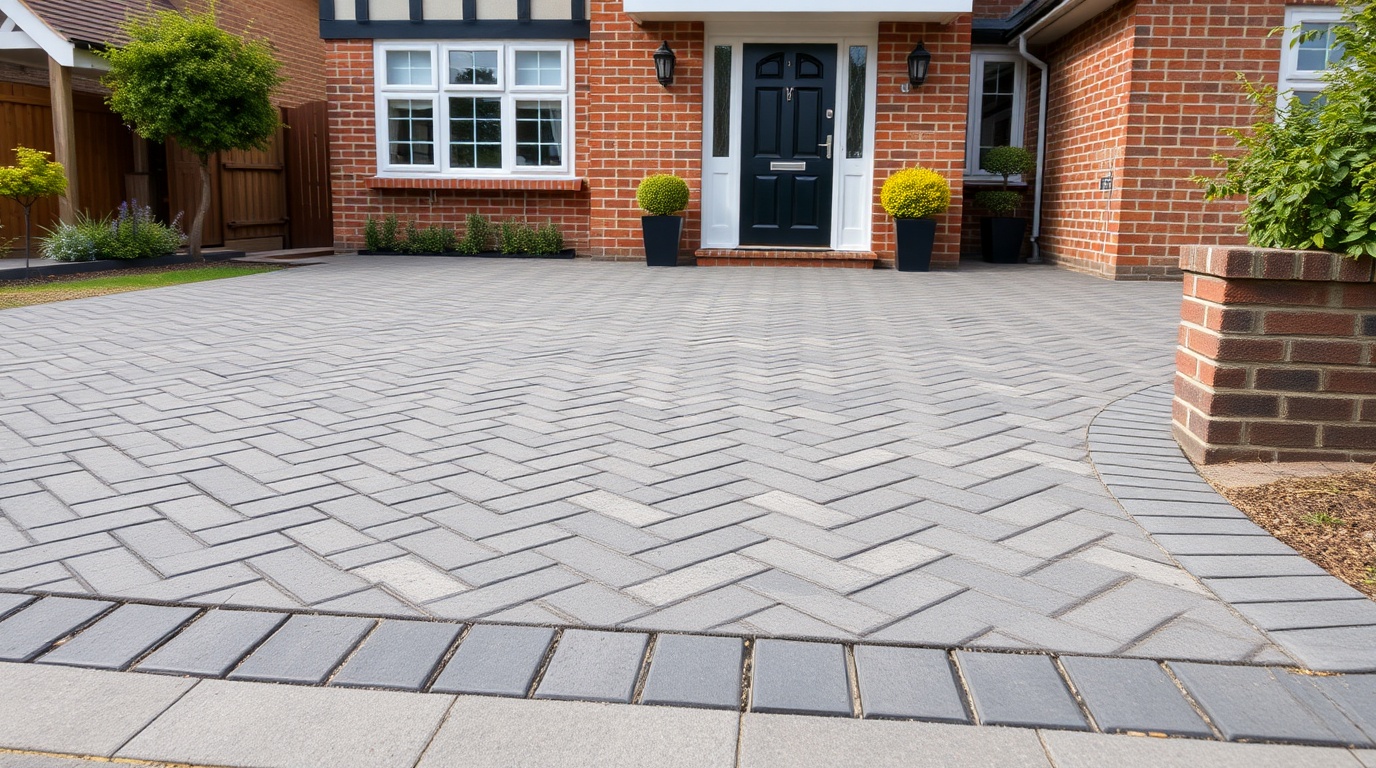
Appearance and resale appeal weigh into the decision too. Block paving offers a wide choice of colours, blends and patterns and reads as a more premium finish at the front of a house, whereas tarmac is plainer and more utilitarian. For many homeowners the choice is a balance between tarmac's lower upfront cost and block paving's looks, repairability and longer effective life.
| Surface | Indicative cost per m² | Typical strengths |
|---|---|---|
| Tarmac | Around £45–£80 | Cheaper, fast to lay, smooth finish |
| Block paving | Around £70–£130 | Durable, repairable, design choice |
| Resin-bound (for context) | Around £40–£70 | Smooth, permeable options |
Indicative UK figures for guidance only; both surfaces need a proper sub-base.
Lifespan, repairs and long-term value
Upfront cost favours tarmac, but the longer view often favours block paving. The key differences play out over years:
- Lifespan: well-laid block paving commonly lasts several decades. Tarmac has a respectable life too, but its surface can soften in hot weather, develop cracks and lose its rich black colour over time.
- Repairs: this is block paving's standout advantage. If a utility company digs a trench, or a section settles, individual blocks can be lifted, the ground reinstated and the same blocks reset — leaving little visible trace. Tarmac patches are harder to blend and often show as a darker or rougher area.
- Weeds and joints: block paving has joints that can attract moss and weeds without maintenance; tarmac is a continuous surface with no joints to weed, though edges can still erode.
- Appearance: block paving offers a wide range of colours, shapes and patterns, including borders and contrasting bands. Tarmac is essentially a uniform surface, usually black.
So while tarmac saves money on day one, block paving's longevity and easy, near-invisible repairs can make it the better value over a long ownership period.
Drainage and planning considerations
Both surfaces raise the same planning point: a large impermeable area over a front garden can require planning permission unless surface water is managed. This affects the comparison:
- Standard tarmac and standard block paving are both impermeable. If the paved area exceeds 5 m² and water cannot drain to a permeable area within the property, you may need permission or a drainage solution.
- Permeable block paving is a recognised way to keep a drive within permitted development, letting water soak through wide joints into a free-draining sub-base. Tarmac has porous variants too, but standard tarmac does not drain.
- Drainage cost applies to both — channel drains or a soakaway add to either surface's total.
For households who want to avoid planning complications and manage rainwater on site, permeable block paving is a strong option, albeit at a higher per-metre rate than tarmac. The decision ultimately balances upfront budget against lifespan, repairability, appearance and how you intend to handle surface water.
Which surface suits your situation
Cost, lifespan and drainage all feed into the choice, but the right answer usually comes down to how you weigh upfront budget against the years that follow. A few common situations point clearly one way or the other:
- Tight budget, large area: tarmac is hard to beat on initial cost over a big drive, where its lower rate per metre adds up to a meaningful saving against block paving.
- Long-term home, wants kerb appeal: block paving's colour, pattern and border options suit households investing in a drive they will enjoy for years, and its repairability protects that look over time.
- Utilities may need access: if drains, cables or a soakaway might be dug up in future, block paving's ability to be lifted and reset with little trace is a genuine practical edge over a continuous tarmac surface.
- Drainage and planning sensitive: on a front garden where surface water must be managed, permeable block paving keeps the project within permitted development, whereas standard tarmac does not drain.
- Speed matters: tarmac is laid quickly as a continuous surface, so it can be the faster option where time on site is a concern.
Neither surface is simply better than the other. Tarmac wins on upfront price and speed; block paving wins on longevity, repairability and design choice. The most expensive mistake is choosing on headline price alone and then needing repairs, planning fixes or a fresh surface sooner than expected. Matching the surface to your budget, how long you plan to stay, and how you will manage rainwater gives a decision you are unlikely to regret — and an itemised quote for each option makes the trade-off concrete rather than theoretical.
Frequently asked questions
Is tarmac or block paving better value over time?
Tarmac is cheaper to install, but block paving often offers better long-term value because it lasts longer and can be repaired by lifting and resetting individual blocks. If you plan to stay many years, or the drive may be dug up for utilities, block paving's durability and repairability can outweigh its higher upfront cost.
Does block paving last longer than tarmac?
Generally yes. Well-laid block paving commonly lasts several decades, while tarmac can soften in heat, crack and fade over time. Both need a proper sub-base, but block paving's individual units make it easier to repair a damaged section without resurfacing the whole drive.
Which is easier to repair, tarmac or block paving?
Block paving. Damaged or sunken blocks can be lifted, the ground reinstated and the same blocks reset with little visible trace. Tarmac is a continuous surface, so patches are harder to blend and often show as a darker or rougher area against the original.
Sources & further reading
- Checkatrade — Tarmac driveway cost
- HomeOwners Alliance — Driveways
- gov.uk — Permeable surfacing of front gardens
Figures on this page are typical UK ranges drawn from published sources and depend on your specific site. They are guidance, not a quotation.