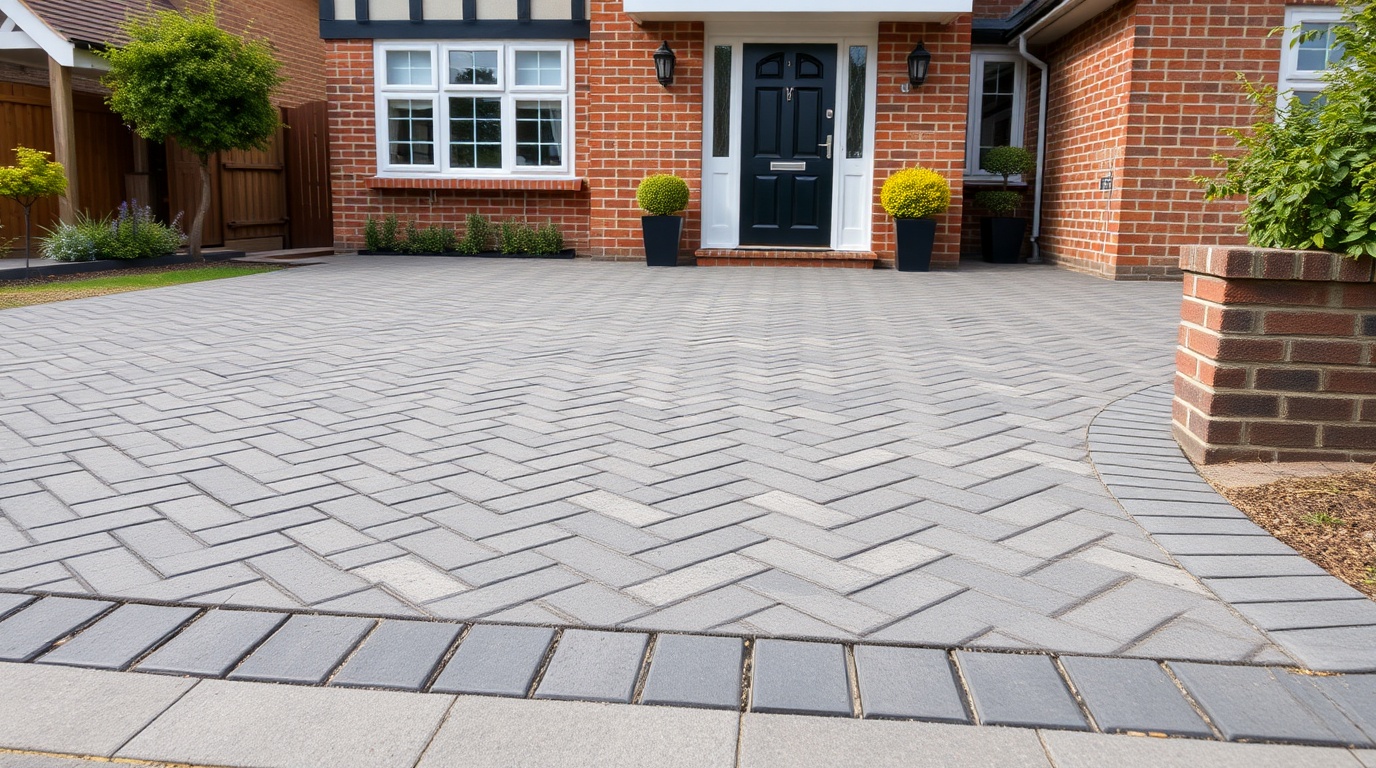
The short answer
Repointing — re-sanding the joints — is the lowest-cost fix, often a relatively small job if the blocks themselves are sound. Relaying, where blocks are lifted, the sub-base or laying course corrected and the blocks reset, costs more because it is closer to a partial rebuild. As rough UK guidance, refreshing joint sand across a drive is a modest cost, while relaying a sunken area can run from a few hundred pounds for a small patch up to a substantial sum for a whole driveway — broadly in the region of £20–£50 per m² for relaying existing blocks, more if the sub-base needs rebuilding. The right choice depends on the cause: loose, weedy joints need repointing; sunken, rutted or rocking blocks need relaying.
Block paving rarely needs full replacement just because it looks tired. Often the blocks are reusable and the problem is the joints or the bed beneath. Knowing which job you need keeps the cost proportionate.
Relay vs repoint at a glance
- Lowest-cost fixRepointing (re-sanding joints)
- Relaying existing blocksAround £20–£50 per m²
- Sub-base rebuildAdds significantly
- Repoint suitsLoose, weedy, washed-out joints
- Relay suitsSunken, rutted, rocking blocks
Repointing: refreshing the joints
Repointing block paving means removing the old, depleted jointing material and refilling the joints. Over time, kiln-dried sand washes out, allowing weeds and moss to take hold and letting blocks shift slightly. The job typically involves:
- Cleaning the joints: raking or jet-washing out old sand, weeds and debris.
- Drying the surface: the blocks must be dry for sand to flow into the joints.
- Re-sanding: brushing fresh kiln-dried sand into the joints and vibrating or tamping it down, sometimes topping up after settlement.
An alternative is a stabilising or polymeric jointing compound, which sets firmer and resists weeds and washout better than plain sand. It costs more per metre but lasts longer and reduces future maintenance. Repointing is the right answer when the blocks are level and sound and the only problem is loose, weedy or washed-out joints.
Relaying: lifting and resetting
Relaying is needed when the surface has gone wrong beneath the blocks — sinking, rutting, ponding water or blocks that rock underfoot. The fault is usually the laying course or the sub-base, not the blocks, so the existing blocks can often be reused. The work involves:
- Lifting the affected blocks and setting them aside.
- Investigating and correcting the cause — re-screeding the sand laying course, or rebuilding a failed sub-base where settlement is severe.
- Re-laying the blocks to the correct level and falls, then re-jointing and compacting.
The figures below are indicative UK guidance. Relaying existing blocks is far cheaper than buying new, but if the sub-base has failed, the cost rises toward that of new construction for that area.
Repointing alone — brushing out the old joints and refilling them with fresh kiln-dried or stabilising sand — is the cheaper end of this work and chiefly addresses weeds, loose joints and a tired look rather than any structural fault. Relaying is the heavier job, reserved for where the surface has actually moved. The honest test is whether the blocks rock or the levels have dropped: if they have, repointing alone will not last, because the cause lies in the bedding or sub-base beneath, not in the joints on top.
Access and area also shape the figure, as with any paving work. A small, accessible patch that simply needs lifting and relaying is a modest job, whereas a large drive where the sub-base has failed across much of its span starts to approach the cost of new construction for that area. Establishing the true cause before committing is the key step, since it determines whether you are buying a quick refresh or a partial rebuild.
| Job | Indicative cost | When it applies |
|---|---|---|
| Repoint / re-sand joints | Modest, per area | Loose or weedy joints, blocks level |
| Relay existing blocks | Around £20–£50 per m² | Sunken or rocking blocks, sound sub-base |
| Relay with sub-base rebuild | Significantly higher | Failed or washed-out sub-base |
Indicative UK figures for guidance only; small patches carry a higher rate per m².
Which one do you need?
Diagnosing the fault correctly avoids paying for more than you need — or fixing the wrong thing. A few simple checks point the way:
- Joints look empty or weedy, but blocks are level and firm: repointing is enough. Re-sand or use a stabilising compound.
- Blocks rock or tip under foot or tyre: the laying course has moved or washed out. The area needs lifting and relaying.
- A dip or rut holds water after rain: the sub-base or laying course has settled. Relaying, possibly with a sub-base repair, is required.
- Edges have spread and blocks are creeping apart: the edge restraint has failed. This needs the edging re-haunched and the affected blocks reset.
Small patches carry a higher rate per square metre than large areas because the set-up cost barely changes. If a drive has widespread sinking, relaying the whole surface in one go is often more economical per metre than repeated small repairs. A good contractor will identify the root cause first — fixing the joints when the sub-base has failed simply defers the problem.
Keeping repair costs down over time
A block-paved drive that is looked after needs far less spent on it over its life than one left to deteriorate, because small problems left unchecked tend to grow into bigger, costlier ones. A little routine maintenance keeps repairs in the cheap-repointing bracket rather than the expensive-relaying one:
- Top up joint sand: joints lose sand to weather and washing over time. Brushing in fresh kiln-dried sand periodically keeps the blocks locked together and stops them shifting, which is the lowest-cost intervention.
- Stay on top of weeds and moss: growth in the joints prises blocks apart and washes sand out. Removing it early, and considering a stabilising compound, slows the cycle that leads to loose blocks.
- Watch the edges: the edge restraint does the structural work. If you notice the perimeter starting to spread, re-haunching the edging early is far cheaper than letting the whole surface creep.
- Address ponding promptly: a dip that holds water signals settlement in the bed. Relaying that small area early prevents the surrounding blocks following it down.
- Clean gently: over-aggressive jet washing blasts sand out of the joints, so wash carefully and re-sand afterwards.
The economics are simple: repointing and re-sanding are modest jobs, while relaying — especially with a sub-base rebuild — costs many times more. Catching loose joints, early spreading or a small dip while they are minor keeps the work in the cheap bracket. A drive that is neglected until widespread sinking sets in often needs whole-area relaying, which is a far larger bill. Regular, low-cost upkeep is the most reliable way to avoid the expensive end of the repair scale.
Frequently asked questions
Can block paving be relaid using the same blocks?
Usually yes. When paving sinks or rocks, the fault is normally the laying course or sub-base rather than the blocks, so the existing blocks can be lifted, set aside and reset once the bed is corrected. This is far cheaper than buying replacements, provided the blocks are not badly damaged.
How often does block paving need repointing?
It varies with use, exposure and the jointing material. Plain kiln-dried sand can wash out over a few years, especially on slopes or where water runs across the surface, and may need topping up periodically. A stabilising or polymeric compound lasts longer before it needs refreshing.
Is it cheaper to relay block paving or replace it?
Relaying is almost always cheaper because it reuses the existing blocks and only corrects the bed or joints. Full replacement is only necessary if the blocks themselves are crumbling, badly stained beyond cleaning, or you want a different look. Most tired drives can be revived without new blocks.
Sources & further reading
- Checkatrade — Block paving repair cost
- MyJobQuote — Driveway repair costs
- Marshalls — Paving maintenance advice
Figures on this page are typical UK ranges drawn from published sources and depend on your specific site. They are guidance, not a quotation.