The short answer
Permeable driveways usually do not need planning permission. The rules introduced in 2008 say that surfacing a front garden over five square metres needs planning permission only if you use a non-permeable material that drains to the road. A permeable or porous driveway — one that lets rainwater soak through into a free-draining sub-base and the ground — is specifically the way to stay within permitted development, so no application is normally required. Permeable block paving, resin-bound over a permeable base, gravel and porous asphalt all qualify when correctly built. Exceptions remain: listed buildings, some flats, properties with permitted development rights removed (Article 4 or planning conditions), and any work that crosses a pavement still needs a separate dropped-kerb approval from the council.
Permeable surfacing exists largely to keep front driveways within the rules. This page confirms when a permeable driveway avoids planning permission and when other consents still apply.
Quick reference
- Permeable front drive over 5m²Usually no permission needed
- Impermeable, drains to roadPermission needed
- Rule introduced2008
- Still separateDropped kerb (highways)
- ExceptionsListed, Article 4, some flats
The rule on front-garden driveways
Since 2008, England has had clear rules on paving front gardens, designed to reduce surface-water flooding from hard surfaces shedding rain onto roads. The rule is straightforward:
- If you surface a front garden of more than five square metres with a traditional, impermeable material (such as standard concrete, standard tarmac or standard non-permeable block paving) and the water drains to the road, you need planning permission.
- If you use a permeable or porous surface, or you direct the run-off to a permeable area within your property, you do not need planning permission — it stays within permitted development.
This is why permeable driveways are so popular: they are specifically the route that avoids the planning application. By choosing a surface that lets rain soak away on your own land, you side-step the permission requirement that an impermeable, road-draining surface would trigger. (Surfaces of five square metres or less, and rear/side areas, are generally not caught by this front-garden rule, though other rules can still apply.)
What counts as permeable, and getting it right
For a permeable driveway to genuinely qualify, the whole build must drain, not just the top layer. A surface that looks permeable but sits on an impermeable base, or that channels water to the road anyway, would not meet the intent of the rules.
Surfaces that can be permeable when correctly constructed include:
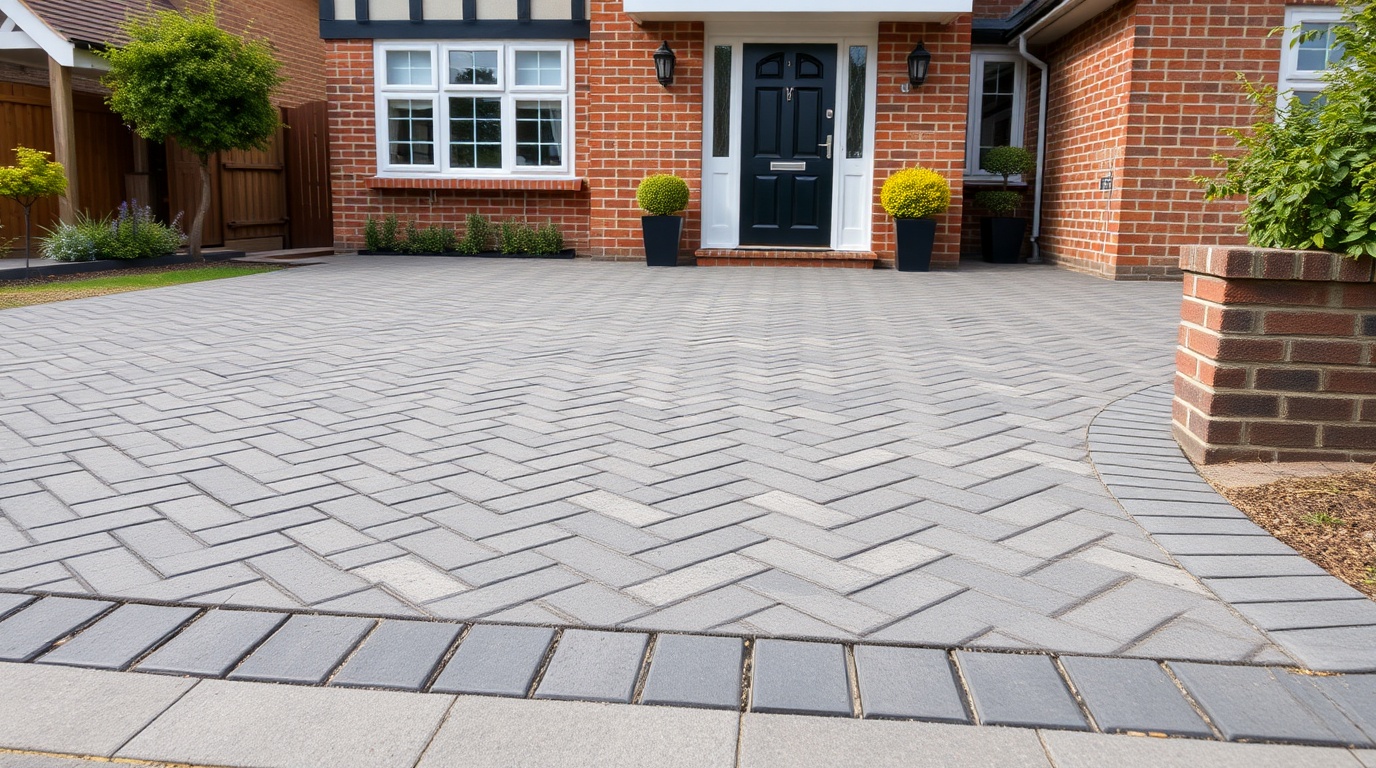
- Permeable block paving — blocks with wider joints filled with permeable grit, over an open-graded (free-draining) sub-base. Note that standard block paving is not permeable by default; it must be specified and laid as a permeable system.
- Resin-bound surfacing — over a permeable base course, allowing water through.
- Gravel — naturally permeable.
- Porous asphalt — a porous version of tarmac.
Alternatively, an impermeable surface can still avoid permission if its run-off is directed to a soakaway, rain garden or permeable border on your land rather than to the road. The key, either way, is that the rainwater is managed on site.
| Surface choice | Planning permission (front, over 5m²)? |
|---|---|
| Permeable block paving (correctly built) | Not normally needed |
| Resin-bound over permeable base | Not normally needed |
| Gravel | Not normally needed (naturally permeable) |
| Standard tarmac / concrete draining to road | Needed |
| Impermeable surface draining to a soakaway on site | Not normally needed |
Indicative guidance only — confirm with your local planning authority.
When permission or other consents still apply
A permeable driveway avoids the planning application in most cases, but not every consent. Watch for these:
- Listed buildings: works at a listed property or within its curtilage can require listed building consent, regardless of permeability.
- Permitted development rights removed: an Article 4 direction or a planning condition on a previous permission (common on newer estates) can remove the right, meaning you must apply even for a permeable drive.
- Flats and maisonettes: these do not have the same permitted development rights as houses, so check.
- Conservation areas: a ground-level permeable drive is often still permitted, but extra controls can apply, so confirm locally.
- Dropped kerb: this is separate. If you must cross a pavement or verge to reach the drive, you need a vehicle crossover approved by the council's highways department, whether or not the surface is permeable.
If you are unsure, your local planning authority can confirm whether permitted development applies, and you can apply for a Lawful Development Certificate for formal proof that no permission is needed. As a rule of thumb, a ground-level, permeable front driveway on a standard house, with a council-approved crossover where needed, can usually be built without planning permission — which is exactly why permeable surfacing is the default recommendation.
Proving compliance and avoiding common pitfalls
Although a permeable driveway usually avoids a planning application, it is worth knowing how to demonstrate that yours complies and how to avoid the mistakes that occasionally turn a supposedly exempt drive into a problem.
Keep evidence of the permeable build. Permitted development relies on the drive genuinely managing water on site. Keeping the installer's specification, product details and photographs of the open-graded sub-base during construction gives you proof that the surface is permeable or that run-off goes to a soakaway, should anyone — a future buyer's solicitor, or the council — ever ask. For total certainty you can apply to the council for a Lawful Development Certificate, which formally confirms the work did not need planning permission; this can be useful evidence when selling the property.
The most common pitfall: a permeable surface on an impermeable base. Laying permeable blocks or resin over a solid, non-draining sub-base looks compliant but is not — the water has nowhere to go and ends up running off, often to the road, which is exactly what the rule was written to prevent. The whole construction must drain, so specify an open-graded sub-base and, on poorly draining ground, a sized soakaway. Standard block paving relaid with ordinary jointing sand is another frequent error: it sheds water like any solid surface and does not qualify.
Don't forget the separate consents. The biggest avoidable surprise is treating permeability as a free pass for everything. It only answers the planning-permission question for front-garden surfacing. A dropped kerb is still a separate council highways approval if you must cross a pavement; a listed building may still need listed building consent; and an Article 4 direction or planning condition can still require an application despite the permeable surface. Checking these alongside the drainage design — rather than assuming permeable means consent-free — is the reliable way to build a front driveway that is both compliant and lawfully accessible. Handled properly, a permeable driveway remains the simplest route to a front drive that needs no planning permission.
Frequently asked questions
Do I need planning permission for a permeable driveway?
Usually not. A permeable or porous front driveway that lets rainwater soak away on site stays within permitted development, even over five square metres. It is impermeable front driveways over five square metres that drain to the road which require planning permission.
Is block paving permeable?
Only if it is specifically laid as a permeable system. Standard block paving on a solid base sheds water and is not permeable by default. Permeable block paving uses wider, grit-filled joints over a free-draining sub-base so rain soaks through — this version avoids the planning rule on front drives.
Does a permeable driveway still need a dropped kerb?
Yes, if you need to cross a pavement or verge to reach it. The dropped kerb (vehicle crossover) is a separate highways approval from the council and is required regardless of whether the driveway surface is permeable. Permeability only affects the planning permission question.
Sources & further reading
- Planning Portal — Paving your front garden
- gov.uk — Permeable surfacing of front gardens guidance
- HomeOwners Alliance — Do I need planning permission?
Figures on this page are typical UK ranges drawn from published sources and depend on your specific site. They are guidance, not a quotation.