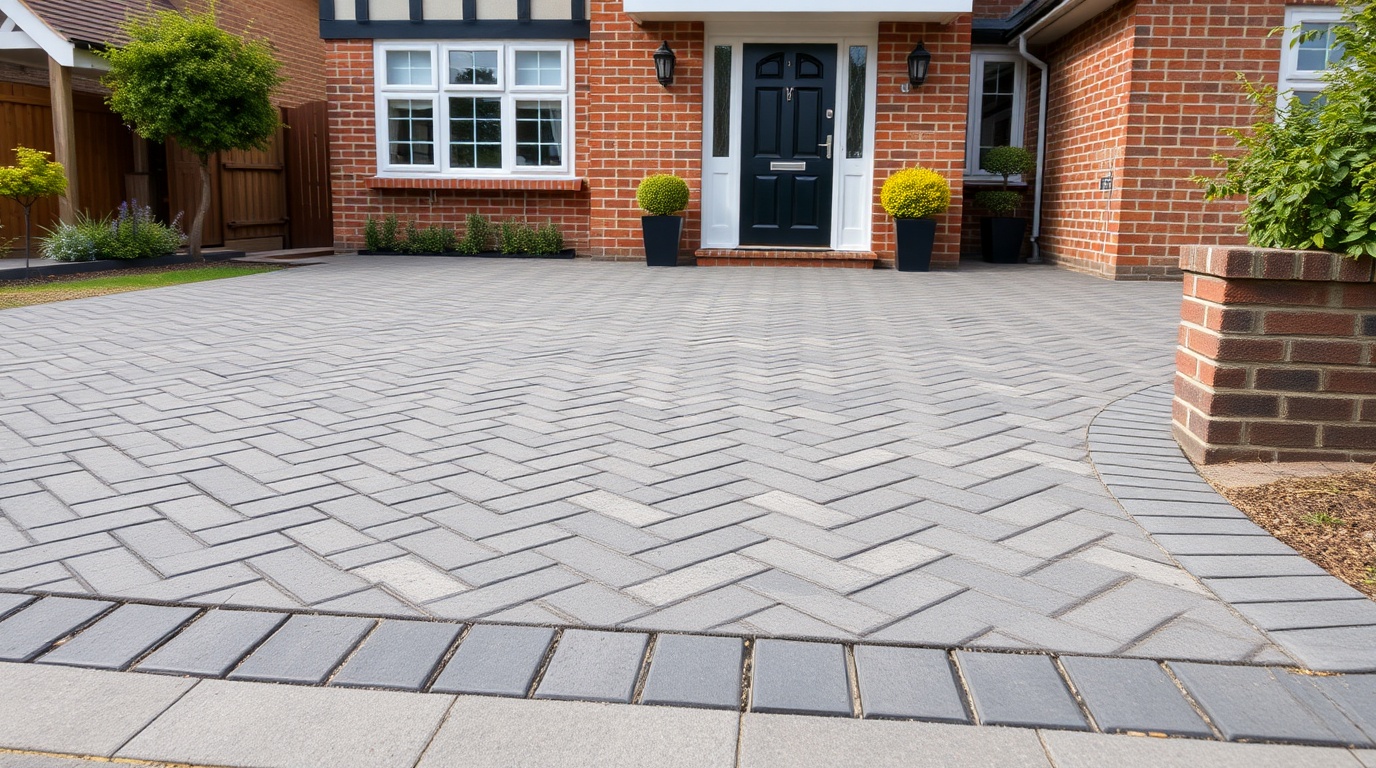
The short answer
Extending or widening a driveway usually does not need planning permission — provided you handle the drainage correctly. The same front-garden rules apply to an extension as to a new drive: if the additional area takes the total impermeable, road-draining front surface over five square metres, you need permission; if you use a permeable surface or drain the run-off to a permeable area on your land, you do not. So extending a front driveway with permeable paving, or ensuring the water soaks away on site, normally stays within permitted development. Exceptions still apply for listed buildings, conservation areas, and properties where permitted development rights have been removed. Widening also commonly needs the council to widen or add a dropped kerb — a separate highways approval.
Extending a drive for an extra car or a turning area is common, and the rules mirror those for a new driveway. This page explains when an extension stays within permitted development.
Quick reference
- Permeable extensionUsually no permission
- Impermeable, pushes over 5m² to roadPermission needed
- Rule basisFront-garden drainage rules (2008)
- Widening the accessOften needs amended dropped kerb
- Listed / Article 4Check — may need permission
The same drainage-led rules apply
Extending a driveway — making it longer, wider, or adding a parking or turning area — is treated under the same front-garden rules as creating a new one. The controls are about how rainwater from the hard surface is managed, not about the act of extending itself.
The key points carry over directly:
- If the extension means a front garden area over five square metres is surfaced with a non-permeable material draining to the road, planning permission is required.
- If you use a permeable or porous surface, or direct the run-off to a permeable area on your own land (soakaway, border, lawn), no permission is needed.
Crucially, the five-square-metre threshold applies to the total impermeable front surface, not just the new bit. So if you already have an impermeable drive and extend it, the combined area is what counts. The simplest way to keep an extension within permitted development is to make the new area permeable (and ideally retrofit on-site drainage for any existing impermeable surface), so the whole front surface manages its water without shedding it to the road.
Widening, access and practicalities
Beyond the planning drainage rule, extending a driveway raises a few practical regulatory points.
Widening the access and the dropped kerb. If you widen a driveway so that vehicles use a broader section of the frontage, you may need to widen the existing dropped kerb or add to it. The vehicle crossover is controlled by the council's highways department, so a wider access typically needs an amended or new crossover application and approval — separate from any planning consideration. The council will assess the wider crossing for safety just as for a new one.
Front boundary walls and gates. If the extension involves altering a front boundary wall, fence or gates, those have their own permitted development limits (for example height limits next to a highway), so check if you are changing the boundary as well as the surface.
Trees and roots. Extending often means paving closer to or around trees. Protected trees (Tree Preservation Orders) or trees in a conservation area can restrict excavation near roots, and even unprotected trees should be considered to avoid damage and future heave or subsidence issues.
Neighbours and water. A larger hard surface produces more run-off, so it is especially important the extended drive does not push surface water onto a neighbour's land or the highway — another reason permeable surfacing or a soakaway is the sensible default.
| Scenario | Planning permission? |
|---|---|
| Permeable extension, any size | Not normally needed |
| Extension run-off to soakaway on site | Not normally needed |
| Impermeable extension pushing total over 5m² to road | Needed |
| Listed building / Article 4 area | Check — may be needed |
| Widening that needs a bigger dropped kerb | Separate highways approval |
Indicative guidance only — confirm with your local planning authority.
Keeping an extension within the rules
To extend a driveway smoothly without a planning application, the practical approach is:
- Make the new area permeable — permeable block paving, resin-bound over a permeable base, or gravel — so it drains on site and does not count against the impermeable-surface rule.
- Manage existing run-off — if the original drive is impermeable and large, consider directing its run-off to a soakaway or permeable border so the whole front surface is compliant.
- Sort the access — if widening the entrance, apply to the council to amend or widen the dropped kerb before using the extended drive.
- Check the exceptions — listed building, conservation area, Article 4 direction or a planning condition can all remove permitted development rights, so confirm none apply.
If anything is uncertain, your local planning authority can confirm whether permitted development applies, and a Lawful Development Certificate provides formal proof that no permission is needed. For most standard houses, extending a front driveway with permeable surfacing — plus an amended crossover where the access widens — keeps the project within the rules while avoiding the surface-water problems a larger impermeable drive would cause.
Sequencing the work and building the extension to last
An extension is rarely just an extra patch of paving — it usually has to join an existing drive, match it visually, and carry water away as one combined surface. Getting the sequence and the construction right is what separates a clean, durable result from a mismatched strip that ponds or sinks at the join.
Confirm the consents before you dig. Because widening commonly needs an amended dropped kerb, and the drainage approach decides whether planning permission applies, both questions are best settled at the design stage rather than mid-build. Confirm with the council that a wider crossover is feasible, and decide whether the new area will be permeable or drained to a soakaway, before any sub-base goes in. Discovering after the fact that the access cannot be widened, or that the finished surface technically needed permission, is the expensive way to learn this.
Match the build, not just the look. A new section laid on a shallower or differently compacted sub-base than the original will settle at a different rate, leaving a ridge or dip along the join. Where the extension carries vehicles, the sub-base should be built to the same depth and standard as a full driveway — typically a well-compacted granular base, or an open-graded free-draining base for a permeable build — so the two areas behave as one. Matching the paving itself is harder than it looks: block and slab colours drift between production batches and weather over time, so an extension in the same product can still read as a patch. Blending the new units through the existing area, or choosing a deliberate contrasting border, often looks more intentional than trying for an invisible match.
Plan the falls and the join. The extended surface needs a continuous, gentle fall towards its drainage point — a soakaway, border or permeable area on your land — with no low spot at the join where water collects. Edge restraints should run around the new perimeter to stop blocks creeping, and any existing edge that becomes an internal join should be checked so it does not act as a dam. Built as a single coherent surface, sized for the ground and drained on site, an extended driveway adds usable space without the settlement, pooling or run-off problems that catch out a poorly sequenced job — and keeps the whole front drive compliant and tidy.
Frequently asked questions
Do I need planning permission to widen my driveway?
Usually not if the widened area is permeable or drains on site. But if widening pushes the total impermeable, road-draining front surface over five square metres, permission is needed. Widening the access also commonly requires the council to amend or widen the dropped kerb — a separate highways approval.
Does the 5 square metre rule count the whole driveway or just the extension?
It counts the total impermeable front surface that drains to the road, not just the new section. So extending an existing impermeable drive can tip the combined area over five square metres and trigger permission, unless the new area is permeable or run-off is directed to a permeable area on site.
Do I need a new dropped kerb to extend my driveway?
Only if the extension widens or changes the vehicle access across the pavement. If you widen the entrance, you typically need to amend or widen the existing dropped kerb via the council's highways department. Extending the drive within the same access width may not need a crossover change.
Sources & further reading
- Planning Portal — Paving your front garden
- gov.uk — Dropped kerbs
- HomeOwners Alliance — Do I need planning permission?
Figures on this page are typical UK ranges drawn from published sources and depend on your specific site. They are guidance, not a quotation.