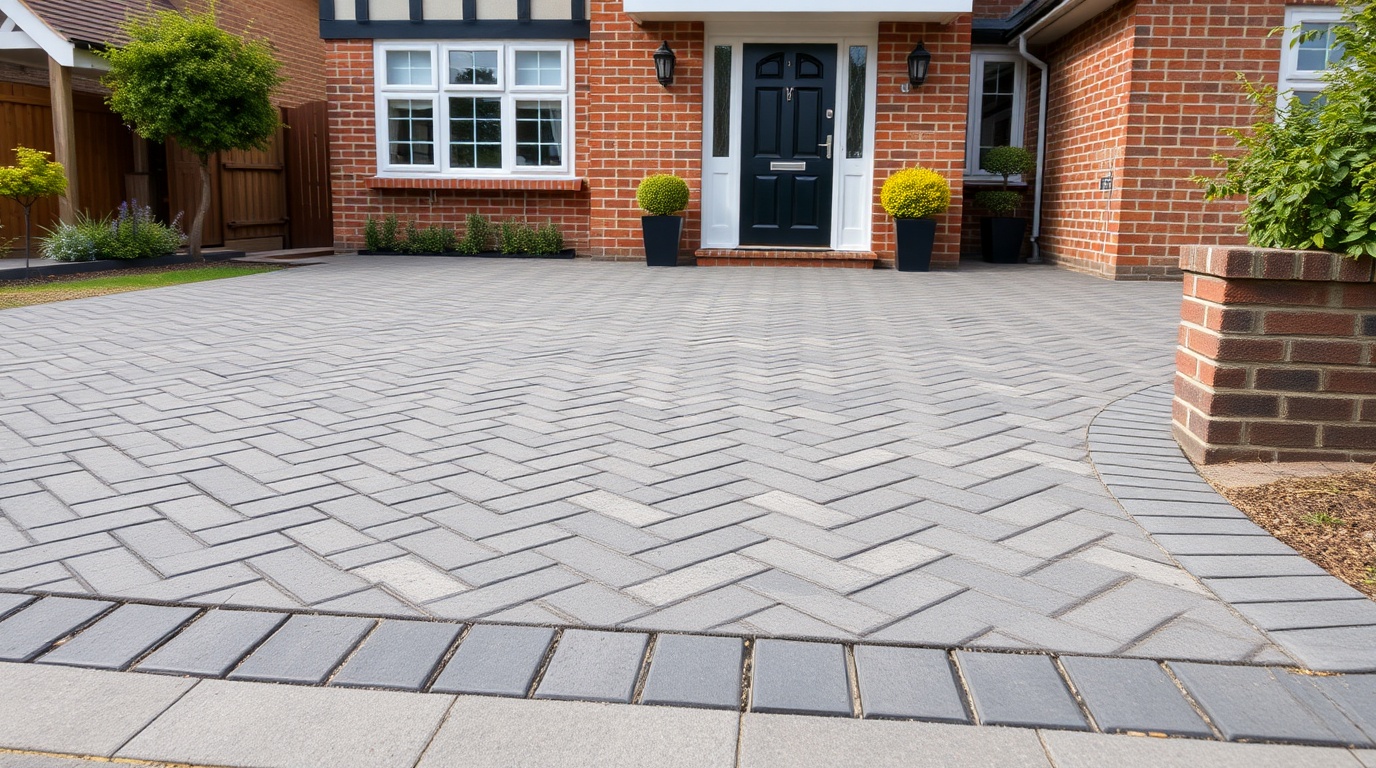
The short answer
Sealing block paving is optional, not essential — paving lasts for decades unsealed, and many UK driveways are never sealed. A good sealer can stabilise the jointing sand, reduce (not eliminate) weed growth and ant activity in the joints, make stains like oil easier to deal with, and slightly enhance the colour. But it is not a cure-all: it does not fix a failing base, it needs reapplying periodically, the surface must be clean, dry and fully cured first, and a poor product or application can leave a hazy or slippery finish. New paving should normally be left to weather for a few weeks to months and any efflorescence allowed to clear before sealing. It is a maintenance choice, weighed on cost versus benefit.
Sealing block paving is widely sold and widely debated. It has real benefits and real limits — the honest answer is that it is a choice, not a requirement.
Sealing paving
- Essential?No — optional maintenance
- Main benefitStabilises joint sand, eases stains
- WeedsReduced, not eliminated
- Seal new paving afterWeeks to months (cured, dry)
- ReapplyPeriodically (product-dependent)
What a sealer does and does not do
A block paving sealer is a liquid that soaks into and coats the surface. Its genuine benefits are practical: it helps bind the kiln-dried sand in the joints so it is less easily washed out or disturbed, which in turn reduces weed seeds and ants taking hold in the joints; it makes the surface less porous, so spills and stains (oil, food, leaf tannins) sit on top and are easier to clean before they soak in; and some sealers slightly deepen the colour or add a sheen. Those are useful, but limited. A sealer does not add strength, does not fix sinking or rocking blocks, does not stop weeds entirely, and is not permanent — it wears and needs renewing. It is cosmetic and protective, not structural.
When to seal new paving
Timing matters. New paving should not be sealed immediately. It needs to weather and fully dry, and any efflorescence — the white, powdery salt bloom that often appears on new concrete blocks — should be allowed to come out and clear, otherwise you can seal it in. Most guidance suggests waiting several weeks to a few months and choosing a dry spell, because the surface and joints must be thoroughly dry for the sealer to penetrate and cure. The joints must also be fully sanded first, since a key job of the sealer is to lock that sand in place. Sealing damp paving, or paving with under-filled joints, tends to give a patchy, disappointing result.
- Clean first: remove dirt, moss, weeds and stains so you are not sealing them in.
- Re-sand joints: top up kiln-dried sand to full joints before sealing.
- Dry weather: apply to a dry surface with no rain forecast for the curing period stated by the product.
- Test an area: trial a small patch to check colour change and finish before doing the whole drive.
Weighing up the trade-offs
Whether to seal comes down to a cost-versus-benefit judgement rather than a rule. On the benefit side: easier ongoing cleaning, more stable joints, somewhat fewer weeds, better stain resistance, and an enhanced look — particularly attractive on a smart front driveway. On the cost and risk side: sealer and labour are an ongoing expense because it must be reapplied every few years as it wears; a poor product or careless application can leave a hazy, blotchy or plasticky finish; some sealers can make a surface more slippery when wet, which matters on slopes and in winter; and once you start sealing, you are somewhat committed to maintaining it for a consistent appearance.
There is also the matter of finish. Sealers range from near-invisible matt penetrating types that simply reduce porosity, to wet-look or gloss finishes that noticeably change the colour and sheen. The wet-look options are popular but more prone to looking artificial and to showing wear unevenly, so a discreet matt or satin sealer is often the safer choice on a driveway. For permeable paving, sealing needs particular care, since a film-forming sealer could interfere with the surface's ability to let water through — the whole point of a permeable build. The practical bottom line: plenty of UK driveways are never sealed and last perfectly well with routine sweeping, occasional washing and re-sanding of joints. Sealing is a reasonable upgrade if you value the easier cleaning and tidier joints and are willing to maintain it — but it is an enhancement you choose, not a step the paving requires to survive. A fair way to decide is to weigh how the drive is used and where it sits: a smart, visible front driveway on a busy household, prone to leaf litter and the odd oil drip, gains the most from sealing, while a quiet, shaded patio that is easy to sweep may simply not need it. Either way, the decision is reversible in spirit — you can start sealing later once the paving has weathered — so there is no rush to commit on day one.
Types of sealer and how they are applied
If you do decide to seal, the type you choose has more effect on the result than almost anything else, so it is worth knowing the broad categories. Penetrating (impregnating) sealers soak into the block and reduce its porosity without leaving much of a surface film; they give a near-natural look, help with stain resistance, and are less prone to the slippery or plasticky problems of film-forming types. Film-forming sealers leave a coating on top — these include matt or satin finishes and the popular wet-look finishes that deepen colour and add sheen. Wet-look sealers are attractive but show wear and reapplication lines more obviously and can be more slippery when wet, so they suit display areas more than steep or heavily trafficked drives. There are also sealers with a sand-binding emphasis, formulated specifically to stabilise the jointing sand.
Application is where good intentions often go wrong, so the basics matter. The paving must be thoroughly cleaned (weeds, moss, algae and stains removed), the joints re-sanded and full, and the surface completely dry with a dry-weather window long enough for the product to cure. New blocks should have weathered for a few weeks to months and any efflorescence allowed to clear first, or it can be sealed in. It is always worth testing a small, inconspicuous area to check the colour change and finish before committing to the whole drive, because a wet-look or gloss result is hard to reverse. The sealer is then applied evenly per the maker's instructions — usually by brush, roller or sprayer — avoiding pooling, which dries glossy and patchy. Done carefully on prepared, dry paving, sealing delivers the easier cleaning and tidier joints people want; done on damp, dirty or under-sanded paving, it traps the problems underneath and looks worse than no sealer at all, which is why preparation, not the sealer itself, is the deciding factor.
Frequently asked questions
How often do you need to re-seal block paving?
It varies by product and use, but sealers wear over time and typically need reapplying every few years to keep working. Heavily used or sun-exposed areas wear faster. Always follow the specific sealer's guidance.
Does sealing stop weeds in block paving?
It reduces them by stabilising the joint sand so weed seeds find it harder to root, but it does not eliminate weeds. Seeds can still settle on the surface and in any gaps, so occasional weeding or treatment is still needed.
Can you seal old block paving?
Yes, provided it is thoroughly cleaned, any weeds and moss removed, the joints re-sanded and the surface fully dried first. Sealing dirty or damp paving traps the problem underneath and gives a poor finish.
Sources & further reading
- Pavingexpert — sealants and surface treatments
- Marshalls — caring for your paving
- Checkatrade — block paving sealing cost and advice
Figures on this page are typical UK ranges drawn from published sources and depend on your specific site. They are guidance, not a quotation.