The short answer
Edgings and kerbs are priced per linear metre, not per square metre, and they are essential to a block-paved driveway rather than a cosmetic extra. As rough UK guidance, supplied-and-laid edge restraints commonly run around £25–£60 per linear metre, depending on the type — simple concrete edging at the lower end, dropped kerbs and decorative setts higher. The cost includes the edging unit, a concrete haunch to hold it, and the labour to set it true to line and level. Edge restraints stop the blocks creeping apart under traffic, so skimping on them risks the whole drive spreading. On a typical drive the edging is a modest share of the total, but a dropped kerb across a public pavement is a separate, often council-controlled, cost.
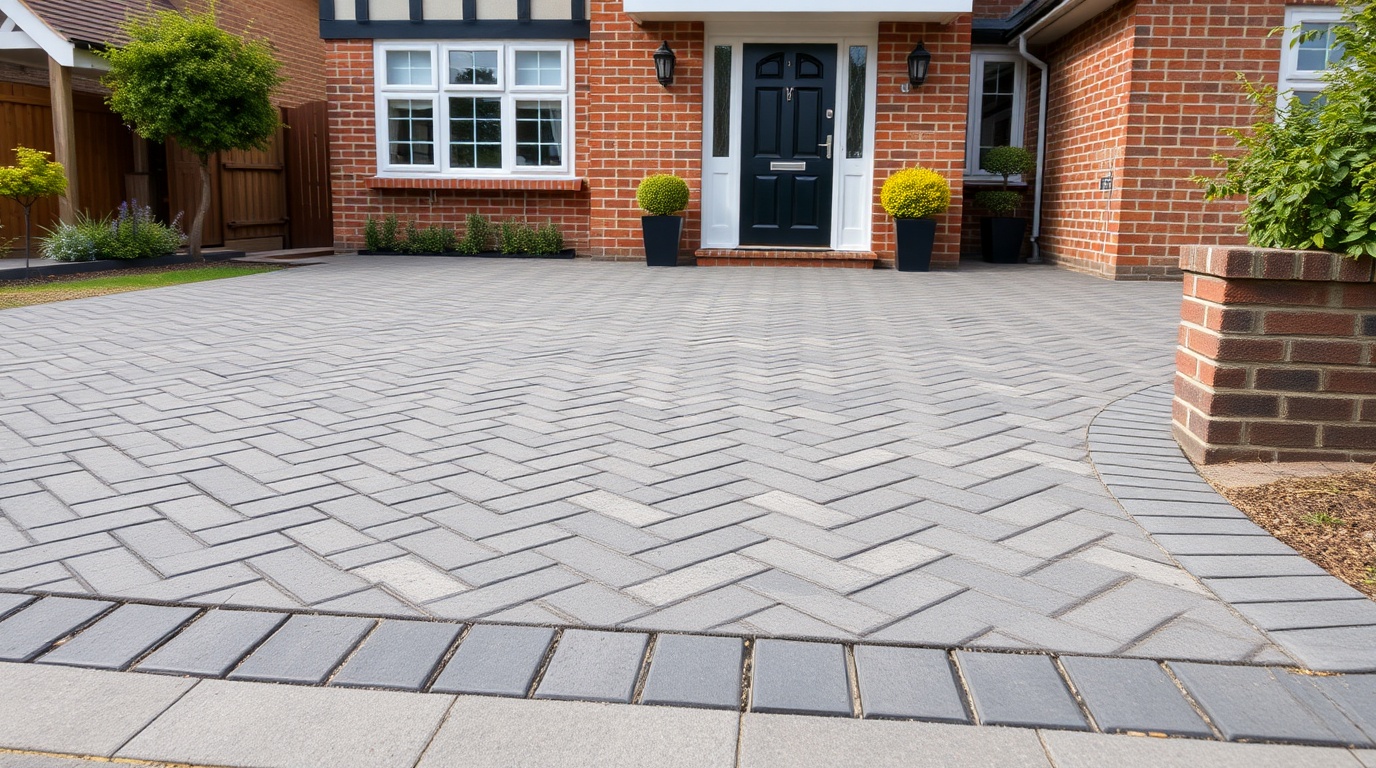
The perimeter of a block-paved drive does crucial structural work: it locks the blocks in place. Because it is measured by length rather than area, edging cost is easy to overlook when budgeting, yet it is never optional.
Driveway edging and kerb costs
- Priced byLinear metre
- Typical supplied-and-laid rangeAround £25–£60 per linear metre
- Lowest-pricedStandard concrete edging
- PremiumKerbs, setts, decorative borders
- Separate costDropped kerb across public pavement
Why edge restraints are essential
Block paving relies on its edges to stay intact. Without a firm restraint around the perimeter, the blocks have nothing to push against, and under the repeated load of vehicle tyres they gradually creep outward. The joints open, the pattern distorts, and the surface fails from the edges in. A proper edge restraint prevents this. It typically consists of:
- An edging unit: a concrete edging, kerb, or a course of blocks or setts set on edge, forming the boundary.
- A concrete haunch: a wedge of concrete behind and beneath the edging that holds it firmly in place. This haunch is what gives the edge its strength.
- Accurate setting: the edging is laid true to line and level, establishing the falls that drain the drive and the line the blocks are laid up to.
Because the edge does real structural work, it is one place where cutting cost is a false economy — a drive with a weak or missing edge restraint will spread and need expensive correction.
Edging types and indicative costs
Edging cost depends on the material and how decorative it is. The figures below are indicative UK supplied-and-laid guidance per linear metre, including the haunch and labour.
Although edging is priced per linear metre, its share of a small driveway's total can be surprisingly high, because a narrow drive has a lot of perimeter relative to its area. The edge restraint is not optional or merely decorative either: it is what stops the blocks spreading and the pattern creeping under traffic, so a haunched, properly bedded edge is structural. A quote that skimps on the edging is storing up movement at the margins of the drive.
Material choice sets the rest of the range. Concrete edging kerbs are the most economical, while clay, natural stone setts and decorative kerbs cost more per metre and take longer to lay neatly around curves. Curved or stepped edges add cutting and labour over a simple straight run, so the layout matters as much as the material when estimating the edging element of a drive. It is worth pricing the edging as a distinct line rather than folding it into a single square-metre rate, since that makes it easy to see what the restraint is costing and to weigh quotes on a like-for-like basis.
| Edging type | Indicative cost per linear metre | Notes |
|---|---|---|
| Standard concrete edging | Around £25–£40 | Functional, economical |
| Block paviours on edge | Around £30–£50 | Matches the drive, neat border |
| Kerb units | Around £35–£60 | Stronger, for heavier edges |
| Natural stone setts | Around £45–£70 | Decorative, premium look |
Indicative UK figures for guidance only; includes haunch and labour.
Dropped kerbs and other separate costs
Some edging-related costs sit outside the driveway contractor's normal quote and need budgeting separately:
- Dropped kerb (vehicle crossover): if your drive needs a new or wider access across a public footway, lowering the kerb is usually controlled by the local council and carried out by approved contractors. It is a distinct cost from the driveway itself and often requires council permission, because it crosses the public highway.
- Decorative borders within the drive: a contrasting border course laid as a feature around the field of paving adds blocks, cutting and labour. This is design cost rather than structural edging, but it adds to the bill.
- Retaining edges on sloping sites: where the drive sits above or below adjacent ground, a stronger kerb or low retaining edge may be needed, increasing cost.
When comparing driveway quotes, check that proper haunched edge restraints are included — not just a row of blocks butted against soil. A quote that omits or skimps on the edge restraint may look cheaper but stores up a spreading problem. If you need a dropped kerb, factor that in as a separate, council-controlled item and confirm the permissions before work starts.
Choosing the right edging for the job
Edgings are not all the same, and matching the type to the situation affects both cost and how well the drive holds up. The choice balances strength, appearance and price, and a few common scenarios point to the sensible option:
- Standard concrete edging: the economical workhorse, well suited to a straightforward perimeter where the edging is not on show. It does the structural job at the lowest cost.
- Block paviours on edge: a course of the same blocks set on their edge gives a neat, matching border that ties the drive together visually while still restraining it. A popular middle ground on price and looks.
- Kerb units: stronger and taller, kerbs suit edges that take heavier load, sit against a lawn or border, or need to retain a level change. They cost more but resist movement well.
- Natural stone setts: the most decorative option, used where the border is a feature. They carry a premium for the material and the extra laying time.
Beyond the unit itself, the quality of the haunching is what really matters. A good edge restraint is bedded on and backed by a concrete haunch sized to hold it firm against the lateral push of traffic. An edging laid without a proper haunch, or simply butted against soil, will move — and once the edge moves, the blocks behind it follow. When comparing quotes, look for confirmation that the edgings are haunched, not just laid, because that detail is the difference between an edge that holds for decades and one that spreads within a few seasons. Spending a little more on a properly restrained, well-chosen edge is one of the most cost-effective decisions in the whole build.
Frequently asked questions
Can you lay block paving without edging?
It is not advisable. Block paving has no mortar between units, so the perimeter edge restraint is what stops the blocks creeping apart under vehicle load. Without a properly haunched edge, the surface spreads, joints open and the drive fails from the edges inward. Edge restraints are essential, not optional.
Is a dropped kerb included in a driveway quote?
Usually not. Lowering a kerb across a public pavement to create a vehicle crossover is typically controlled by the local council and carried out by approved contractors, so it is priced separately from the driveway. It often requires council permission because it affects the public highway.
Why is edging priced per metre rather than per square metre?
Edging follows the perimeter of the drive, so its quantity depends on the length of the boundary, not the area. A long, narrow drive can have more edging per square metre than a square one. Pricing per linear metre reflects how the material and labour actually scale.
Sources & further reading
- Checkatrade — Driveway edging cost
- gov.uk — Dropped kerbs and vehicle crossovers
- Marshalls — Edgings and kerbs
Figures on this page are typical UK ranges drawn from published sources and depend on your specific site. They are guidance, not a quotation.