The short answer
Block paving stays put through three things working together: solid edge restraints, full jointing sand, and a properly compacted base. The perimeter must be held by concrete edge restraints (kerbs or edging on haunching) — without them the whole field of blocks creeps outwards under traffic and the joints open. The joints must be fully filled with kiln-dried sand so the blocks interlock and cannot rock or tip. The blocks must sit on a compacted sub-base and a screeded sharp sand laying course, then be vibrated in. Good drainage protects all of this by stopping water washing the sand out. If paving is already moving, the fix is to reinstate the edges, re-sand the joints, and correct the base where needed.
Block paving relies on interlock, not adhesive. Keeping it from moving is about edges, sand and compaction — the same things that, when missing, let it spread.
Stop blocks moving
- Hold the edgesConcrete edge restraints
- Lock the fieldFull kiln-dried joint sand
- Support belowCompacted sub-base + laying course
- Protect itGood drainage / falls
- If movingReinstate edges, re-sand, fix base
Edge restraints hold the perimeter
The single most important defence against spreading is a sound edge restraint around the whole perimeter. Block paving is a flexible system — the blocks are held together by interlock, not cemented down — so without something firm to push against, the load from tyres gradually shoves the blocks outwards. As they spread, the joints open, the kiln-dried sand escapes, and the laying sand can wash out from the edges, so the whole surface loosens from the outside in. Proper restraints — kerbs or edging blocks bedded and haunched in concrete — contain that force and keep the field tight. Restraints are needed at every free edge, including against lawns, borders and any soft boundary, not just the obvious sides. Weak, missing, or broken-away edging is one of the commonest reasons a drive spreads, so reinstating it is usually the first step in stopping movement.
Full joints and proper compaction
Inside the held perimeter, two things keep individual blocks from moving:
- Full jointing sand: the kiln-dried sand packed into the joints is what makes adjacent blocks interlock and share load. Full joints stop blocks rocking, tipping or shuffling under traffic. Half-empty joints — whether never properly filled, washed out by water, or blasted out by pressure washing — remove that interlock, so the blocks start to move individually. Keeping the joints topped up is therefore central to keeping the paving still.
- Proper compaction and a sound base: the blocks must be laid on a compacted sub-base and a true sharp sand laying course, then vibrated in with a plate compactor so they bed evenly and the sand consolidates. A weak or uneven base lets blocks settle and rock no matter how good the edges and joints are.
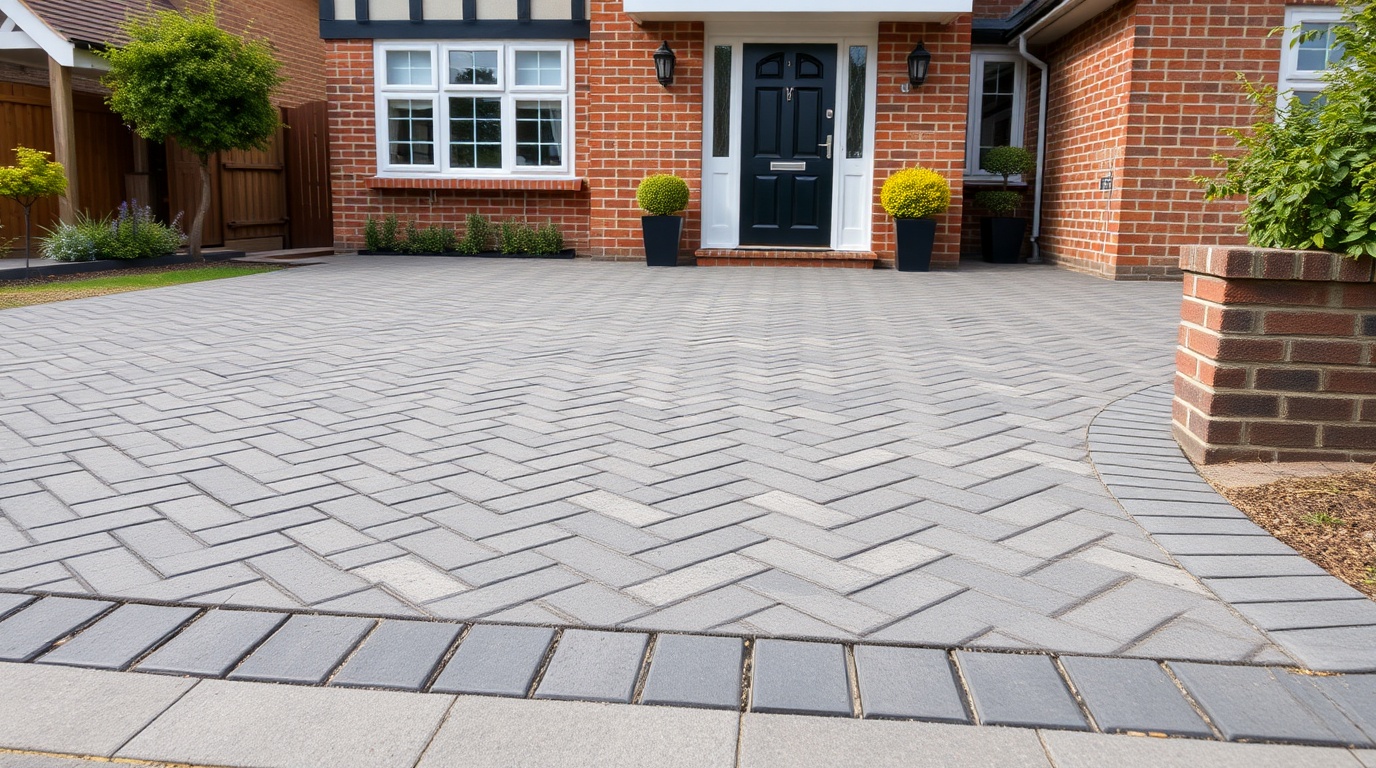
Choosing an interlocking laying pattern also helps: herringbone resists the twisting and braking forces of vehicle tyres far better than simple stretcher bond, which is why it is the standard for driveways.
Drainage, maintenance and fixing movement
Even a well-built drive can start to move if water is allowed to attack it. Correct falls and working drainage carry surface water away to a gully, channel or permeable area; where water is allowed to pond or to track under the blocks — from a missing fall, a blocked gully, or a downpipe discharging onto the surface — it washes out the laying and jointing sand, and the blocks lose both support and interlock. So protecting against movement is partly a drainage job: keep water moving off and away, and keep gullies and channels clear. Routine maintenance then keeps the system tight over the years — sweep regularly, top up the kiln-dried sand whenever the joints look low, and consider sealing once the joints are full to bind the sand and slow washout.
If paving is already moving, the repair follows the same logic in reverse. Start by checking the edges: reinstate or rebuild any failed restraints on proper concrete haunching, because trying to tighten the field without sound edges is futile. Then deal with the cause of any sand loss — fix the drainage or falls so water is no longer washing the joints out. Lift and relay any blocks that have dropped or spread, correcting the laying course or sub-base beneath them if that is where the fault lies, then re-compact. Finally, re-sand the joints fully with kiln-dried sand and top them up as they settle. Done in that order — edges, drainage, base, then sand — the repair addresses why the paving moved rather than just nudging the blocks back, which is the only way to stop it happening again. The thread running through all of it is that block paving is a flexible, interlocking system held by its edges, its sand and its base; keep those three sound and the blocks stay where they are laid.
Laying pattern and how movement starts
One factor people overlook in keeping paving still is the laying pattern, which is not just a cosmetic choice on a driveway. A herringbone pattern — blocks laid at 45 or 90 degrees so each one keys against its neighbours in two directions — resists the twisting, braking and turning forces that car tyres impose far better than a simple stretcher bond (running bond), where continuous straight joints let rows of blocks creep along together under load. This is why herringbone is the standard for drives that take vehicles, while stretcher bond is better kept to paths and patios that only see foot traffic. The interlocking geometry effectively spreads and resists the forces that would otherwise nudge blocks out of line, so the pattern works alongside the edges and the jointing sand to hold everything together.
It also helps to understand how movement typically begins, because catching it early is far easier than rebuilding a spread drive. Movement usually starts small and at the edges: a restraint cracks or settles, or the laying sand begins to wash from an exposed edge, and the perimeter blocks loosen slightly. From there it propagates inwards — loose edge blocks let the next row move, joints open, kiln-dried sand escapes from the widening gaps, and the loss of interlock lets more blocks shuffle under traffic. Water accelerates the whole process by washing the sand away faster. The practical lesson is to act on the early signs: a block that starts to rock, a joint that has opened, sand visibly collecting at the bottom of the drive after rain, or an edging that has tilted. Topping up the joints, clearing and fixing drainage, and reinstating a failing edge while the problem is still localised stops the inward spread before it becomes a full relay. Combined with the right interlocking pattern, sound edges, full joints and a compacted base, that habit of early attention is what keeps a block paved surface sitting exactly where it was laid for the long term.
Frequently asked questions
Why is my block paving spreading apart?
Almost always because the edge restraints are missing, weak or have broken away. With nothing firm to push against, traffic shoves the blocks outwards, the joints open and the sand escapes. Reinstating solid, concrete-haunched edges is the fix.
Does re-sanding the joints stop blocks moving?
Full joints are essential to interlock, so re-sanding helps, but only if the edges and base are sound. If the restraints have failed or the base is weak, the sand alone will not hold the blocks; you must fix those causes too.
Will sealing stop my block paving moving?
Sealing binds the jointing sand so it resists washing out, which helps keep joints full and reduces minor movement. It is not a structural fix, though, and will not compensate for missing edge restraints or a weak sub-base.
Sources & further reading
- Pavingexpert — edge restraints and detailing
- Marshalls — block paving installation and care
- Brett Landscaping — block paving help and advice
Figures on this page are typical UK ranges drawn from published sources and depend on your specific site. They are guidance, not a quotation.