The short answer
Block paving is often worth it where you value appearance, repairability and a long service life, and you accept some routine upkeep. It costs more to install than tarmac or gravel because it is hand-laid, but it earns that back in three ways. Longevity: a well-laid block drive can last decades, and because individual blocks can be lifted and relaid, the surface can be kept going almost indefinitely with spot repairs. Repairability: a sunken patch or a utility trench can be reinstated almost invisibly. Kerb appeal: patterns, colours and borders lift a property and can support resale value. The trade-offs are higher upfront cost and periodic re-sanding, weeding and cleaning. For a plain budget surface it may not be; for a long-term, smart, repairable drive it usually is.
Block paving costs more than some alternatives, so it is fair to ask whether it justifies the price. This page sets out the genuine benefits and the trade-offs so you can judge for your own situation.
Quick reference
- Upfront costHigher than tarmac or gravel
- Typical lifespanDecades when well laid
- RepairabilityLift and relay individual blocks
- Main upkeepRe-sand joints, weed, clean, seal
- Permeable optionYes, to satisfy front-drive rules
The case for block paving
Several genuine strengths explain why block paving remains a popular UK driveway choice despite costing more than some surfaces.
- Long service life. Laid on a properly compacted sub-base with sound edge restraints, a block paved drive can last for decades. Quality concrete and clay blocks are made to carry vehicle loads year after year.
- Repairable, block by block. This is arguably the single biggest advantage. If a patch sinks, an oil stain ruins a block, or a utility company digs a trench, the affected blocks can be lifted, the base corrected, and the same blocks relaid — often with no visible scar. Few other surfaces can be repaired so cleanly.
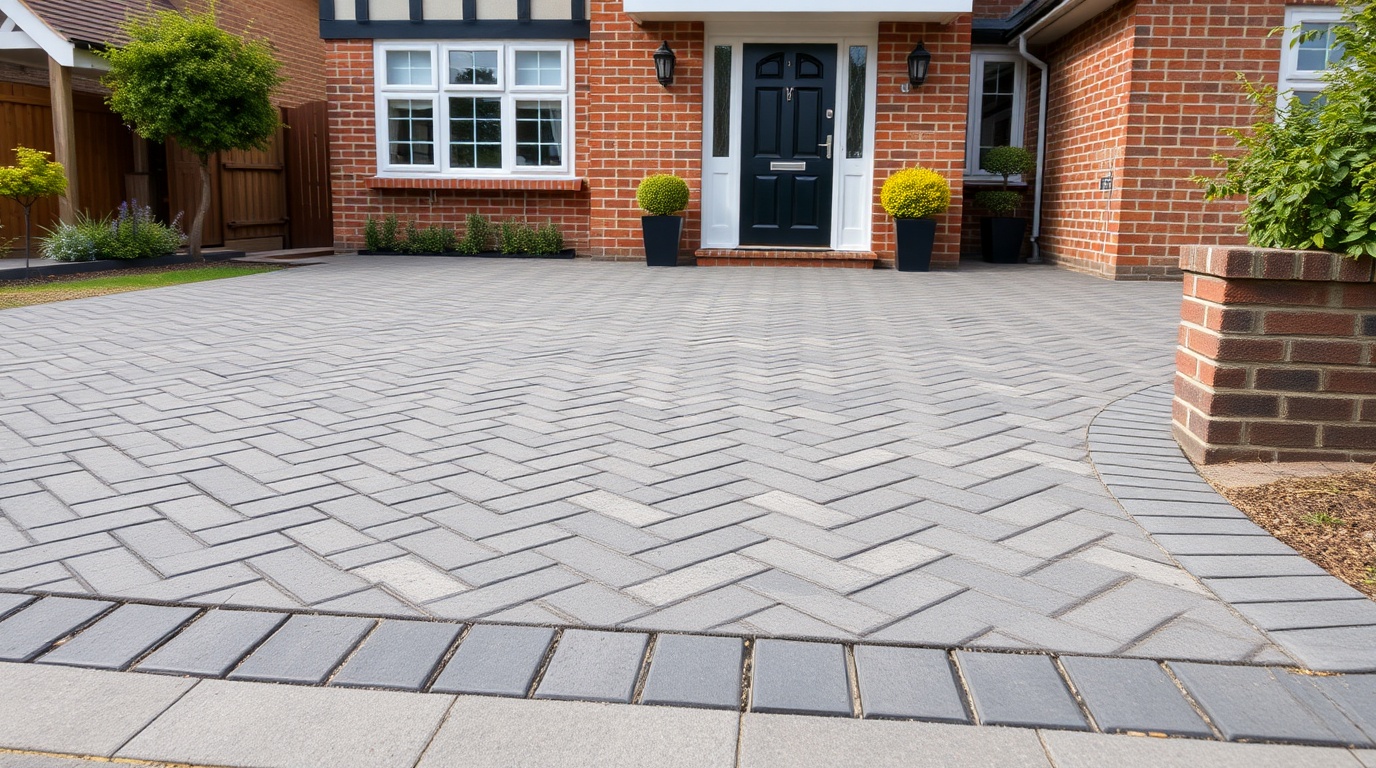
- Kerb appeal. The range of colours, shapes, laying patterns and contrasting borders lets a drive complement the house, which many buyers and homeowners value.
- Permeable option. Block paving can be specified as a permeable system that lets rain soak away, which helps a front driveway stay within permitted development under UK drainage rules.
Together these mean block paving is less a disposable surface and more a long-term asset you maintain and repair rather than replace.
The honest trade-offs
Block paving is not the right answer for every situation, and it is worth being clear about the downsides.
Higher upfront cost. Because it is hand-laid block by block, the labour content is high, so it costs more per square metre than tarmac or gravel. Complex patterns and decorative borders add further to the price.
Routine maintenance. The sand-filled joints are the surface's strength and its upkeep. Sand can wash out over time and need topping up; weeds and moss can colonise joints; and periodic cleaning and re-sealing helps keep the surface looking its best. This is modest work, but it is more than a tarmac drive demands day to day.
Settlement and weeds if poorly laid. The quality of installation matters enormously. A drive laid on an inadequate sub-base, without proper edge restraints or correct falls, can rut, sink or harbour weeds. Much of block paving's reputation — good or bad — comes down to how well it was installed.
So the value question is really about your priorities: if you want the lowest cost and least upkeep, another surface may suit; if you want a long-lived, repairable, attractive drive and will do a little maintenance, block paving tends to repay the investment.
| Consideration | How block paving compares |
|---|---|
| Upfront cost | Higher (hand-laid) |
| Lifespan | Decades when well laid |
| Spot repairs | Excellent — lift and relay |
| Routine upkeep | Moderate — joints, weeds, sealing |
| Kerb appeal | Strong — patterns and borders |
| Drainage compliance | Good — permeable option available |
Indicative summary for guidance only.
When block paving is and isn't worth it
Pulling it together, block paving tends to be worth it when:
- You want a smart, lasting finish with kerb appeal and a choice of patterns and colours.
- You value easy individual repairs — for example if services run under the drive and may need access.
- You want a permeable surface to keep a front drive within permitted development.
- You are happy to do occasional upkeep — re-sanding, weeding and cleaning — to keep it looking good.
It is less compelling when budget is the overriding factor, when the area is very large and a plain surface would do, or when you want the absolute lowest maintenance. In those cases tarmac, concrete or gravel may serve better.
For resale, a well-kept block paved drive generally supports a property's presentation and first impression. It is not a guaranteed financial return, but a tidy, repairable, attractive driveway is rarely a drawback when selling. Judged over its full life — including the ability to repair rather than replace — block paving represents reasonable long-term value for many UK homes.
Getting value from block paving: specification and upkeep
Whether block paving proves worth it for you depends heavily on two things you control: the quality of the installation and the routine upkeep you give it. Both are worth understanding before you decide.
On installation, the value of a block drive is built into the parts you cannot see. A drive laid on a deep, well-compacted sub-base (commonly MOT Type 1), with concrete-bedded edge restraints around every exposed edge, correct falls so water runs off, and joints properly filled and compacted, will perform for decades and stay liftable and repairable. A cheaper drive that skimps on sub-base depth, omits edge restraints, or is laid on soft or waterlogged ground will rut, spread and sink early — turning what should be a long-term asset into a short-term disappointment. This is why two block paving quotes can differ significantly: the difference is often in the hidden specification, not the blocks. To get genuine value, read what a quote includes for excavation depth, sub-base, edging and bedding, not just the price per square metre and the block style.
On upkeep, modest regular attention preserves both the look and the longevity. Keeping the joints topped up with kiln-dried sand stops blocks loosening; brushing and the occasional wash keeps moss and algae down; treating weeds early stops them establishing; and re-sealing periodically can protect the colour and make cleaning easier (though sealing is optional). None of this is heavy work, but neglect lets joints empty, weeds take hold and stains set, which is what gives some block drives a tired reputation. A drive that is well laid and lightly maintained tends to repay its higher upfront cost; one that is cheaply laid and neglected may not — which is the honest heart of the value question.
Seen over its whole life rather than just the day it is installed, block paving's higher upfront price buys a surface you can repair, re-level and keep looking smart for decades rather than replace. For homeowners who specify the build well and give it light, regular care, that combination of longevity, repairability and kerb appeal is what makes it worth the money.
Frequently asked questions
Does block paving add value to a house?
A well-kept block paved driveway improves a property's kerb appeal and first impression, which supports its presentation when selling. It is not a guaranteed financial return, but a tidy, attractive, repairable drive is rarely a negative and can help a home stand out to buyers.
Is block paving high maintenance?
It needs moderate, occasional upkeep rather than constant attention. Joints may need re-sanding over time, weeds and moss can be treated, and periodic cleaning and re-sealing keeps it looking good. This is more than tarmac demands but far from onerous, and it preserves the surface for decades.
How long does a block paving driveway last?
Laid properly on a compacted sub-base with sound edge restraints, a block paved driveway can last for decades. Crucially, because individual blocks can be lifted and relaid, the surface can be maintained almost indefinitely with spot repairs rather than full replacement.
Sources & further reading
- Marshalls — Driveway paving guidance
- HomeOwners Alliance — Driveway ideas and costs
- Checkatrade — Block paving cost guide
Figures on this page are typical UK ranges drawn from published sources and depend on your specific site. They are guidance, not a quotation.