The short answer
A SuDS-compliant driveway is one that manages rainwater using Sustainable Drainage Systems principles — dealing with surface water on your own land rather than discharging it to the public sewer or road. In practice this means either a permeable or porous surface (such as permeable block paving, resin-bound, or gravel) that lets rain soak through into a free-draining sub-base and the ground, or directing run-off to a permeable area on your property such as a soakaway, rain garden or border. This matters because, since 2008, surfacing a front garden over five square metres with an impermeable material that drains to the road can require planning permission — whereas a SuDS-compliant, permeable driveway usually stays within permitted development.
SuDS sounds technical, but for a homeowner it boils down to keeping rainwater on your land. This page explains what a SuDS-compliant driveway involves and why it keeps you within the rules.
Quick reference
- SuDS stands forSustainable Drainage Systems
- Core ideaManage rainwater on site
- Permeable surfacesPermeable paving, resin-bound, gravel
- AlternativeDrain to soakaway / permeable area
- Planning linkPermeable front drive avoids permission
The principle behind SuDS
Sustainable Drainage Systems (SuDS) are an approach to managing rainwater that mimics natural drainage. Instead of channelling every drop of surface water straight into drains and sewers — which contributes to flooding and overloads the system in heavy rain — SuDS aim to slow, store and soak away water close to where it falls.
For a driveway, this means the hard surface should not simply shed water onto the public road or into the foul/surface sewer. Instead, a SuDS-compliant driveway either lets the rain pass through the surface into the ground, or collects run-off and routes it to a feature on your own land where it can soak away or be stored.
The benefits are practical as well as regulatory: less surface water running off reduces local flood risk, lessens the load on drains, and helps recharge groundwater. For homeowners, the headline benefit is that a SuDS-compliant front driveway generally avoids the need for planning permission that an impermeable drive draining to the road would trigger.
How to make a driveway SuDS-compliant
There are two broad routes to a SuDS-compliant driveway, and many designs combine them.
1. Use a permeable or porous surface. The surface itself lets water pass through into a free-draining sub-base and then the ground:
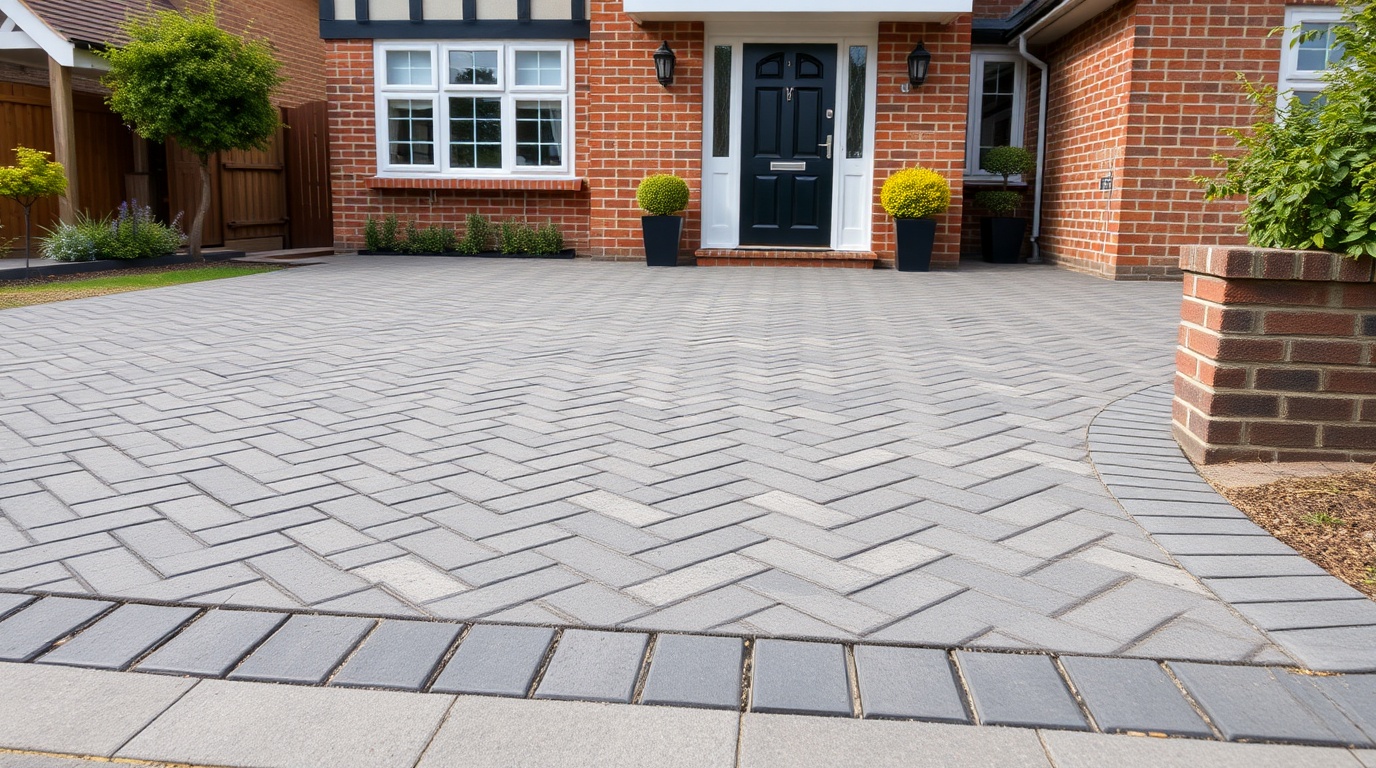
- Permeable block paving — blocks laid with wider joints filled with permeable grit, over an open-graded (free-draining) sub-base. Standard block paving can be made permeable this way; it is not permeable by default.
- Resin-bound surfacing — when laid over a permeable base, water passes through the bound aggregate.
- Gravel — naturally permeable, with water draining straight through.
- Porous asphalt — a porous version of tarmac, less common domestically.
2. Direct run-off to a permeable area. If the surface is impermeable (solid concrete, standard tarmac, standard block paving), you can still comply by channelling water to:
- A soakaway — a buried gravel-filled pit or crate that stores water and lets it soak into the ground.
- A rain garden, border or lawn — a planted, free-draining area that absorbs run-off.
- Permeable channels or gulleys that carry water to one of the above on your land (not to the road).
| Approach | How it works | Examples |
|---|---|---|
| Permeable surface | Water soaks through the surface | Permeable block paving, resin-bound, gravel |
| Run-off to permeable area | Surface sheds water to a feature on site | Soakaway, rain garden, border |
| Combination | Permeable surface plus on-site storage | Permeable paving over a sub-base soakaway |
Indicative approaches for guidance only.
SuDS and planning permission
The reason SuDS matters so much for driveways is its link to planning rules. Since 2008, the rules on paving front gardens changed: if you surface a front garden of more than five square metres with a non-permeable material and the water drains to the road, you need planning permission. You do not need permission if:
- The surface is permeable or porous (so rain soaks through on site), or
- The run-off from an impermeable surface is directed to a permeable area within your property (a soakaway, border or lawn) rather than to the road.
In other words, a SuDS-compliant driveway is the route that keeps a front drive within permitted development. Designing for SuDS from the outset — choosing permeable paving or planning a soakaway — typically avoids a planning application altogether.
A few extra points: even a permeable driveway should be built correctly, with the right sub-base and falls, so it actually drains rather than pooling. On poorly draining ground a designed system (soakaway sized to the area, possibly with an overflow) is important. And a SuDS approach does not remove the separate need for a dropped kerb if you must cross a pavement to reach the drive — that is a highways matter handled by the council. Getting the drainage right protects both your property and your neighbours from surface water problems.
Designing and building a driveway that genuinely drains
Calling a driveway SuDS-compliant only holds true if it actually manages water on site through its whole life. A few design and construction points separate a drive that drains properly from one that pools, floods or quietly sends water to the road despite a permeable-looking surface.
The sub-base does the work. With a permeable surface, the visible blocks or aggregate are only the top of the system. Underneath sits an open-graded, free-draining sub-base — angular stone with voids that store water temporarily and let it percolate into the ground below. A conventional, tightly compacted sub-base would defeat the purpose by holding water at the surface. The sub-base depth should be sized to the area of the drive and the local rainfall, so it can hold a heavy downpour without overflowing. This is why a permeable drive cannot simply reuse a standard tarmac build with permeable blocks on top.
Ground conditions and overflow. Permeable systems rely on the ground accepting water. On free-draining sandy or gravelly soils this works well; on heavy clay, percolation is slow, so the design may need a larger storage layer, a sized soakaway, or a controlled overflow to a suitable outfall. A simple percolation test indicates how fast the ground drains and whether extra storage is needed. Ignoring poor ground is the most common reason a nominally compliant drive still floods in winter.
Falls, edges and upkeep. Even a permeable drive benefits from gentle falls so that, in extreme rain that exceeds the system's capacity, water is directed to a soakaway or border on your land rather than towards the house or the highway. Edge restraints keep the build contained, and the surface needs light maintenance to keep draining: permeable joints and porous surfaces can clog over years with silt, moss and debris, so occasional brushing or specialist cleaning preserves the permeability that keeps the drive compliant. Built with the right sub-base, sized for the ground, and kept clear, a SuDS driveway manages its own rainwater for the long term — which is both the environmental aim and the basis for staying within permitted development.
Frequently asked questions
What does SuDS stand for?
Sustainable Drainage Systems. It is an approach to managing rainwater that slows, stores and soaks water away close to where it falls, rather than sending it straight into drains and sewers. For driveways it means dealing with surface water on your own land.
Does a SuDS-compliant driveway need planning permission?
Generally no. A permeable or porous front driveway that drains on site, or one whose run-off is directed to a permeable area on your land, usually stays within permitted development. It is impermeable front driveways over five square metres draining to the road that require permission.
What surfaces are SuDS-compliant?
Permeable block paving, resin-bound surfacing over a permeable base, gravel and porous asphalt all let water soak through. Alternatively, an impermeable surface can be made compliant by directing run-off to a soakaway, rain garden or permeable border on your own land.
Sources & further reading
- Planning Portal — Paving your front garden
- gov.uk — Permeable surfacing of front gardens guidance
- Marshalls — Permeable paving
Figures on this page are typical UK ranges drawn from published sources and depend on your specific site. They are guidance, not a quotation.