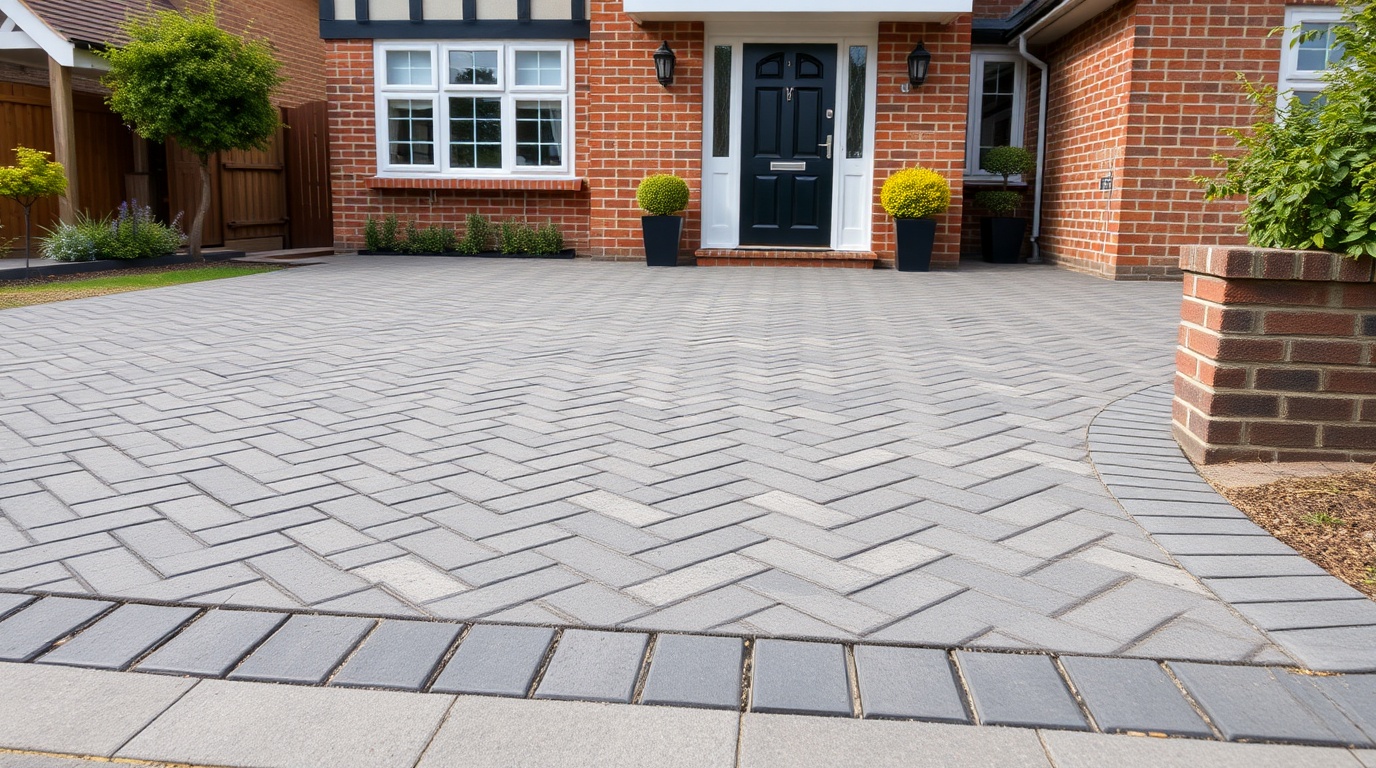
The short answer
For a block paving driveway the standard sub-base is MOT Type 1 — a graded crushed stone (often limestone or granite) that compacts to a dense, interlocked layer capable of spreading vehicle loads. It is laid over a firm, well-drained formation, usually on a geotextile membrane, and compacted in layers. On top of the sub-base sits a separate sharp sand laying course (around 30–50mm) that the blocks bed into — the sand is not the sub-base. For a pedestrian patio a thinner Type 1 layer is enough; a driveway taking cars needs a thicker, properly compacted sub-base, and soft or clay ground needs more depth again. Building sand, soil or scalpings are not substitutes for proper Type 1.
The sub-base is the part of a block paving build you never see and the part that decides whether it lasts. Here is what material to use and why.
Sub-base material
- Standard sub-baseMOT Type 1
- Driveway depthCommonly ~100–150mm
- Patio depthOften less, ~75–100mm
- Laying courseSharp sand (separate layer)
- Under itGeotextile membrane
Why MOT Type 1 is the standard
MOT Type 1 is a crushed aggregate graded from roughly 40mm down to dust. That mix of sizes is deliberate: the larger stones provide strength while the fines fill the voids, so when compacted it locks together into a dense, stable layer that spreads load and drains reasonably. It takes its name from the old Ministry of Transport specification for road sub-bases, which is why it is trusted under driveways. Used over a firm formation and a geotextile membrane (which stops the stone punching into soft subsoil and stops subsoil pumping up into the stone), Type 1 gives the blocks above a sound foundation. It is compacted in layers rather than all at once, because a thick lift cannot be compacted properly through its full depth.
Sub-base versus laying course
People often confuse the two granular layers in a block paving build, but they do different jobs. The sub-base is the structural layer — crushed stone, compacted hard, carrying and spreading the load. The laying course above it is a thin bed of sharp (grit) sand, usually 30–50mm consolidated, that the blocks are pressed into so they sit level and tight. The laying course is screeded flat but not compacted before the blocks go down; it is consolidated later when the blocks are vibrated in. Using soft building sand instead of sharp sand for the laying course is a common error — it holds too much water and moves under load, so the blocks settle unevenly.
| Layer | Material | Job |
|---|---|---|
| Sub-base | MOT Type 1 crushed stone | Structural; spreads load |
| Laying course | Sharp / grit sand | Beds the blocks level |
| Joints | Kiln-dried sand | Interlocks the blocks |
| Below all | Geotextile membrane | Separates stone from subsoil |
The granular layers in a block paving build and their separate functions. Source: Pavingexpert; Marshalls installation guidance.
How ground conditions change what you need
The amount and type of sub-base is not one-size-fits-all; it depends on the ground beneath and the load above. On a firm, free-draining formation a driveway sub-base of around 100–150mm of well-compacted Type 1 is typical. But several conditions push that requirement up. Heavy clay shrinks and swells with moisture and drains poorly, so it often needs a deeper sub-base, sometimes with a capping layer of coarser stone beneath the Type 1, to bridge the soft ground. Made ground, old garden soil, or filled areas can be soft and inconsistent, and may need digging out further until a firm formation is reached. Where heavy vehicles will use the drive — a large van, a caravan, or regular commercial traffic — the sub-base needs to be thicker and more carefully compacted than for a single family car.
Drainage interacts with all of this. A sub-base that stays waterlogged loses strength, so the formation must drain or be drained, and the falls must carry surface water away. For permeable block paving — increasingly relevant since draining a new front driveway to the road can trigger planning permission — the sub-base specification is different again: it uses clean, open-graded crushed stone (with the fines removed) so that water can pass down through the construction into the ground, rather than the dense, fines-rich Type 1 used for conventional impermeable paving. In short, MOT Type 1 is the right default answer for a standard driveway, but the correct depth, any capping layer, and whether you switch to a permeable build all depend on your soil, your drainage and the traffic the drive will carry. When in doubt on soft or uncertain ground, the safe move is to dig deeper and compact more, not less.
Compaction and the membrane underneath
The sub-base material is only half the story; how it is installed matters just as much. MOT Type 1 only achieves its strength when it is compacted in layers (lifts) with a vibrating plate or roller. A thick layer dropped in one go cannot be densified through its full depth, so it stays loose lower down and consolidates later under traffic — which is exactly how a drive ends up rutting even though the right material was used. Each lift is compacted before the next is added, and the sub-base is brought up to the correct level and falls as it is built, not flattened dead level. A light watering can help the fines bind during compaction in dry weather, while in wet weather the formation must be workable rather than waterlogged, since saturated ground cannot be compacted properly.
Beneath the sub-base, a geotextile separation membrane over the formation does an unglamorous but important job. It keeps the crushed stone and the underlying subsoil apart, so the angular stone does not get pushed down into soft ground (losing thickness and strength) and soft subsoil does not pump up into the sub-base under repeated loading (contaminating it and reducing its stiffness). On weak or variable ground a heavier-duty membrane, or a coarser capping layer beneath the Type 1, may be added to bridge the soft spots. The membrane is cheap relative to the cost of the whole drive and is standard good practice, which is why skipping it to save a little is a false economy — its absence is a quiet contributor to sub-bases that thin and weaken over the years. In short, the correct answer to what sub-base you need is not just a material but a method: specified MOT Type 1, over a separation membrane, compacted in layers to the right depth and falls.
Frequently asked questions
Can I use Type 2 or scalpings instead of Type 1?
Type 1 is the recognised driveway standard because its grading compacts to a dense, stable layer. Type 2 or unspecified scalpings may be acceptable in some lighter applications, but for a driveway taking vehicles, properly specified MOT Type 1 is the safe choice.
Does the sub-base need compacting in layers?
Yes. A thick layer of crushed stone cannot be compacted properly all the way through in one pass. The sub-base is built up and compacted in layers with a plate compactor or roller, so the full depth becomes dense, stable and able to carry load.
Is sand the sub-base?
No. Sharp sand forms the thin laying course that the blocks bed into, not the structural sub-base. The sub-base is compacted crushed stone (MOT Type 1) beneath that sand. Confusing the two is a common cause of sinking paving.
Do I need a membrane under the sub-base?
A geotextile membrane over the formation is standard practice. It stops the crushed stone being pushed into soft subsoil and stops subsoil contaminating the sub-base, both of which preserve the strength of the layer over time.
Sources & further reading
- Pavingexpert — sub-bases and materials
- Marshalls — driveway installation advice
- Brett Landscaping — block paving installation guide
Figures on this page are typical UK ranges drawn from published sources and depend on your specific site. They are guidance, not a quotation.