The short answer
The driveway surface that suits your home depends on four things: budget, drainage rules, the look you want and how much upkeep you accept. Gravel is lowest-cost and naturally permeable but loose and high-upkeep. Tarmac is inexpensive over large areas and quick, but plain. Concrete is durable and economical but can crack and is hard to make permeable. Block paving offers patterns, easy individual repairs and a permeable option, at a higher cost. Resin-bound gives a smooth, low-weed, permeable finish but needs a sound base. There is no single best surface; the right one balances these factors for your property, with drainage compliance often the deciding constraint on a front driveway.
Each common UK surface has a sweet spot. This page frames the decision neutrally so you can match a surface to your home rather than chase a single 'right' answer.
Quick reference
- Lowest-cost to layGravel
- Most pattern choiceBlock paving
- Smoothest, lowest-weedResin-bound
- Most durable plain surfaceConcrete
- Key front-drive constraintDrainage / permeability
Start with drainage and budget
Two factors narrow the field before looks even come into it.
Drainage rules. In England, a front-garden driveway over five square metres that drains to the road can require planning permission. You avoid this by using a permeable or porous surface, or by directing rainwater to a permeable area on your own land (SuDS principles in force since 2008). So if you are paving a front garden, a surface that drains on site — gravel, resin-bound, or permeable block paving — starts with an advantage. A solid concrete or standard tarmac surface that sheds water to the road may trigger an application.
Budget. Surfaces span a wide cost range. Gravel is typically lowest-cost to install; tarmac is economical especially over large areas; concrete is cost-effective when plain; block paving and resin-bound sit higher, reflecting hand-laid labour or specialist materials. Set a realistic budget early, because it eliminates some options immediately.
With drainage and budget fixed, the remaining choice is about appearance, durability and the upkeep you are willing to do.
How the five surfaces compare
Here is how the common UK driveway surfaces stack up across the factors that decide most projects. None is universally best; each trades strengths against weaknesses.
- Gravel — lowest-cost, naturally permeable, informal look; but loose, scatters, needs raking and topping up, harder for prams and wheelchairs.
- Tarmac — inexpensive over large areas, fast to lay, smooth; but plain, limited choice, can soften in heat, patches hard to match.
- Concrete — durable and economical when plain; but rigid so can crack, hard to repair invisibly, difficult to make permeable.
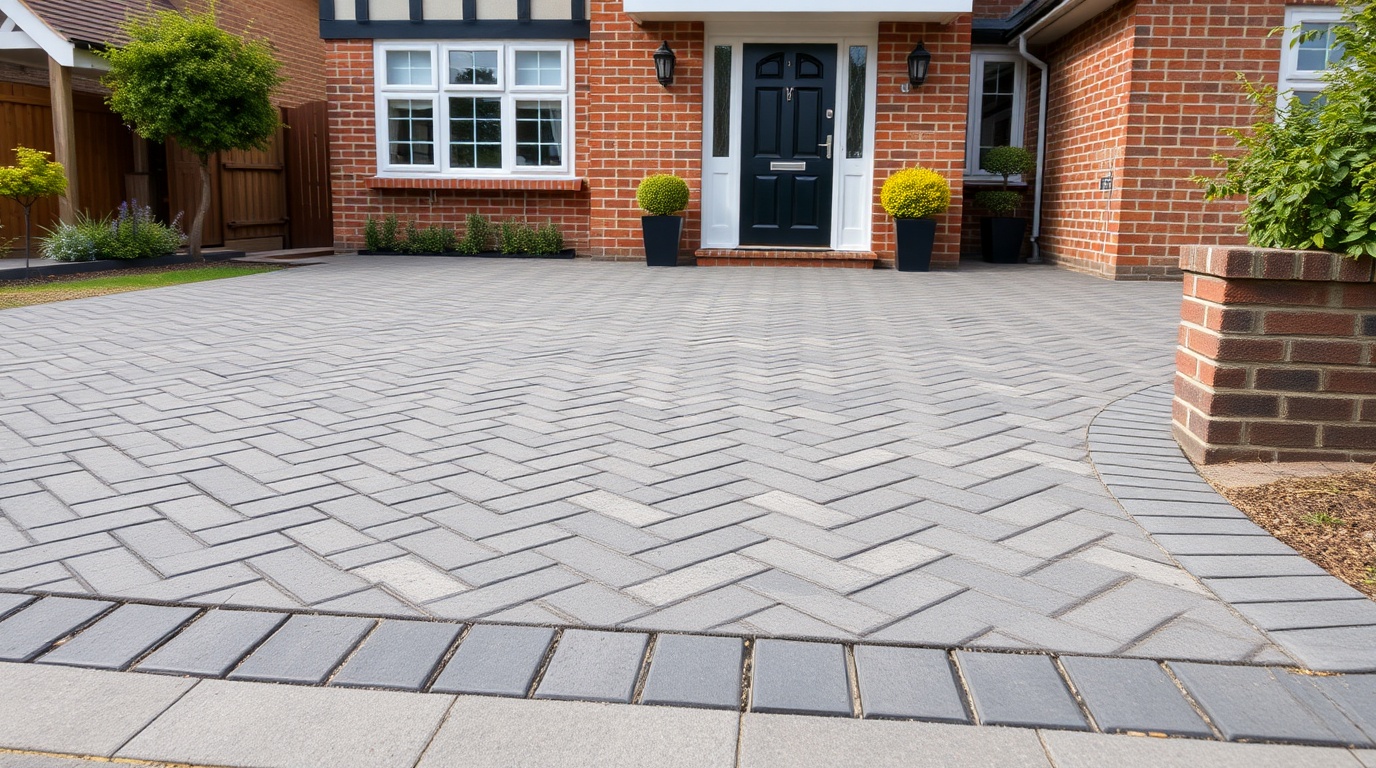
- Block paving — wide pattern and colour choice, repairable block by block, permeable option, long-lived; but higher cost and routine joint upkeep.
- Resin-bound — smooth, seamless, low-weed, permeable; but needs a sound base and careful cleaning, and repairs can be faintly visible.
| Surface | Cost | Drainage | Upkeep | Appearance |
|---|---|---|---|---|
| Gravel | Lowest | Naturally permeable | High (rake, top up) | Informal, rural |
| Tarmac | Low | Sheds (porous available) | Low | Plain, uniform |
| Concrete | Low–medium | Impermeable (hard to change) | Low | Plain or decorative |
| Block paving | Higher | Permeable if specified | Moderate (joints) | Patterns, borders |
| Resin-bound | Higher | Permeable | Low–moderate | Smooth, modern |
Indicative comparison for guidance only.
Matching a surface to your home
Bringing it together, here is how the surfaces tend to suit different situations:
- Tight budget, large area: tarmac or gravel give the most surface for the money.
- Front garden with drainage rules: gravel, resin-bound or permeable block paving keep you within permitted development.
- Kerb appeal and repairability: block paving offers patterns, borders and the ability to lift and relay blocks.
- Smooth, low-weed, modern finish: resin-bound, provided you have a sound base.
- Plain, durable, low-cost: concrete, accepting the cracking and permeability limitations.
- Easy access for prams and wheelchairs: firm, level surfaces (block paving, resin-bound, tarmac, concrete) beat loose gravel.
For most homeowners the decision is a balance rather than a clear winner. Fix your budget and drainage approach first, then choose the surface whose appearance and upkeep profile best fits how you will use the drive and how it should look from the street.
Other factors worth weighing before you decide
Cost, drainage, looks and upkeep are the headline factors, but a few others can tip the decision for your particular home and are easy to overlook.
Repairability and buried services. If water, gas, electricity or drainage runs under the proposed drive and might ever need access, block paving is uniquely forgiving — blocks can be lifted and relaid almost invisibly after a trench. Continuous surfaces (concrete, tarmac, resin-bound) are harder to reinstate without a visible patch. Where future access is likely, this can outweigh other considerations.
Ground conditions. Soft, sloping, or made-up ground, or heavy clay that drains poorly, affects every option. Rigid concrete is most at risk of cracking on moving ground; permeable surfaces rely on the soil accepting water, so heavy clay may need a designed soakaway. A surface that suits a free-draining, stable plot may be a poor fit for a wet, unstable one, so the ground should shape the shortlist.
Slope and falls. Steep drives can be tricky for loose gravel (which migrates downhill) and need careful falls for any surface so water drains safely away from the house and not onto the highway. A very sloping site narrows the practical choices.
How you will use it. Heavy or frequent vehicle movements, a caravan or van, turning manoeuvres, and wheelie-bin or pushchair traffic all favour firm, level surfaces. Aesthetic priorities — matching a period property, a contemporary look, or simply low effort — then refine the choice within the surfaces that fit your budget, drainage and ground.
Weighing these alongside cost, drainage, appearance and upkeep usually points clearly to one or two suitable surfaces for a given home, rather than leaving every option open. The aim is a surface that fits the site and the way you live, drains correctly, and looks right from the street — not simply the lowest-cost or the most fashionable.
It also pays to think about the whole project rather than the surface alone. A front driveway usually needs a compliant drainage approach to stay within permitted development, and a dropped kerb from the council's highways department if vehicles must cross the pavement — both apply whichever surface you choose. The quality of the hidden construction matters as much as the visible finish: a properly compacted sub-base, sound edge restraints and correct falls decide whether the drive stays flat and drains for years, regardless of the material on top. Setting the budget and drainage approach first, confirming any consents, and only then choosing between the surfaces that fit your ground and your taste, is the route to a drive that performs and still looks right well into the future.
Frequently asked questions
What is the best driveway surface in the UK?
There is no single best surface — it depends on your budget, drainage rules, desired look and upkeep tolerance. Gravel is lowest-cost, tarmac is economical over large areas, concrete is durable, block paving offers patterns and repairs, and resin-bound is smooth and low-weed. The right one balances these for your home.
Which driveway surface needs the least maintenance?
Resin-bound and tarmac are generally the lowest-upkeep firm surfaces, as resin-bound has no joints for weeds and tarmac is a smooth continuous layer. Gravel needs the most attention through raking and topping up, while block paving needs occasional joint re-sanding and weed treatment.
Which driveway surface is best for drainage?
Naturally permeable surfaces — gravel, resin-bound and permeable block paving — are best for drainage and help a front driveway stay within permitted development. Solid concrete and standard tarmac shed water and may need rainwater directed to a permeable area on site to comply.
Sources & further reading
- Planning Portal — Paving your front garden
- HomeOwners Alliance — Driveway ideas and costs
- Marshalls — Driveway paving guidance
Figures on this page are typical UK ranges drawn from published sources and depend on your specific site. They are guidance, not a quotation.